
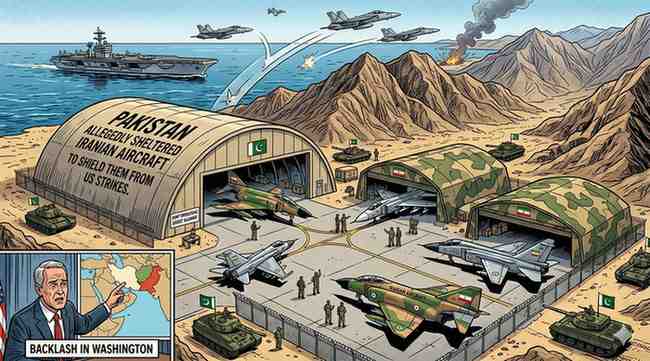
Islamabad, May 2026 — Recent intelligence reports exposing Pakistan’s decision to shelter Iranian military aircraft at its Nur Khan Airbase have shattered Islamabad’s carefully crafted image as a neutral peacemaker overnight.
What supporters might call a pragmatic regional balancing act, critics and US lawmakers describe as a dangerous double game that has finally been exposed.
Selling “Ceasefire Diplomacy” as a Cover For weeks, Pakistan’s leadership promoted a narrative of “ceasefire diplomacy.” They positioned Islamabad as a neutral mediator, inviting both US and Iranian officials to the table to de-escalate the conflict. In reality, the structure was entirely different: while preaching peace publicly, Pakistan was actively coordinating with the Iranian military, escorting and sheltering Tehran’s critical assets from American airstrikes.
The illusion of neutrality was maintained through diplomatic press conferences. The truth: Pakistan was quietly running a covert operation that actively undermined US military efforts.
Strategic Dispersal or Direct Defiance? During the peak of the US military campaign aimed at neutralizing Iran’s radar and command infrastructure, Iran moved its prized RC-130 reconnaissance aircraft to Pakistani soil.
The RC-130 is not a mere transport plane; it is the eyes and ears of the Iranian military, used for signal intelligence, tracking US naval movements, and monitoring Gulf air operations. By allowing it to park safely at Nur Khan Airbase—a highly secure facility near Pakistan’s military headquarters and nuclear command—Islamabad ensured Iran’s combat and surveillance capabilities were preserved.
The Compulsion to Comply: Borders, Oil, and Beijing Why would Pakistan risk Washington’s wrath? Behind the scenes, the calculations were driven by internal desperation and external pressure:
- Border Anxiety: Pakistan fears that a weakened, unstable Iran would trigger a surge in separatist insurgencies, smuggling, and refugee flow across the volatile Balochistan border.
- Energy Desperation: Crippled by inflation and fuel prices that recently spiked by 40-50%, Pakistan urgently needs Iranian goodwill for cheap oil and energy lifelines.
- The China Factor: As the ultimate background player and massive investor in both nations, Beijing likely operated as the invisible broker, quietly nudging Pakistan to accommodate Tehran’s request.
The End of Playing Both Sides The leak of this covert operation brings immediate and severe geopolitical consequences across the region:
- Washington: The backlash in the US is massive. Lawmakers are furious, demanding a complete re-evaluation of Pakistan’s status as a mediator. America holds significant economic leverage over Pakistan, particularly regarding IMF bailouts, which could now be weaponized.
- New Delhi: India faces a sudden strategic headache. A tightening Pakistan-Iran nexus directly threatens India’s investments in the Chabahar Port and its broader influence in Afghanistan, forcing New Delhi to rapidly pivot closer to Gulf allies.
Bottom Line The era of Islamabad successfully playing Washington and Tehran against each other has hit a wall. With the Nur Khan Airbase revelations, the masks are off: Pakistan cannot publicly champion peace while privately shielding the very military assets Washington is trying to dismantle.
Leave a Reply