
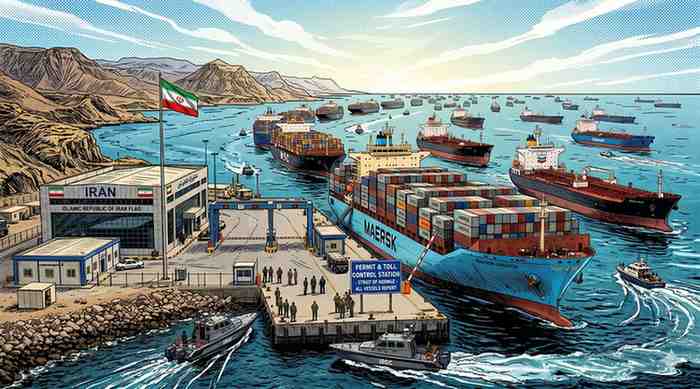
Tehran, May 2026 — Iran has fundamentally rewritten the rules of global maritime trade by launching a formal permit and toll system for the Strait of Hormuz. What was once a zone of informal military tension has been transformed into a strictly regulated administrative corridor, effectively ending the era of free transit through one of the world’s most vital chokepoints.
From “Pirates” to Sovereign Regulators
For years, Iran’s influence over the Strait was defined by “informal military intimidation”—shadowy attacks and ship seizures that allowed Tehran to deny involvement while causing chaos. Under the new rules, Iran is shifting to a formal administrative model.
By establishing the Persian Gulf Strait Authority (PGSA), Tehran is positioning itself as a “sovereign regulator” rather than a regional disruptor. To pass, every ship must now submit to a 40-question vetting process, revealing everything from ownership links to the specific nationalities of the crew on board.
Weaponizing the 20% Chokepoint
The stakes are astronomical. Roughly 20% of global oil trade and a quarter of the world’s LNG shipments pass through this narrow strip of water.
- The Price of Entry: Even a minor administrative delay by the PGSA can send shockwaves through the market.
- The Result: Crude oil prices, which fluctuated wildly between $60 and $120 during recent conflicts, now sit at the mercy of Iranian paperwork.
By institutionalizing this control, Iran has created a mechanism to trigger global inflation at the stroke of a pen.
The “Friendship Filter”: Who Gets Through?
The permit system isn’t just about money; it’s about geopolitical leverage. Iran has effectively created a “fast track” for its allies while building a wall for its enemies.
- The Safe Zone: Countries like India, China, and Russia are expected to receive safe passage. India’s “balanced diplomacy” and investments in the Chabahar Port have secured it a seat at the table.
- The Red List: Ships with any links to the U.S., Israel, or NATO face “administrative” denials or indefinite “security reviews.”
Bypassing Sanctions with Bureaucracy
The ultimate goal of this toll system is de facto legitimacy. By forcing global shipping firms to comply with PGSA regulations, Iran is effectively forcing the world to ignore Western sanctions. If a shipping company pays the toll and fills out the Iranian form, they are recognizing Tehran’s authority over the waterway—rendering U.S.-led isolation efforts toothless.
Bottom Line
The Strait of Hormuz is no longer just a geographical chokepoint; it is now a sovereign toll booth. By trading missiles for permits, Iran has gained the power to tax global trade and hand-pick which nations’ economies are allowed to function. The message to the West is clear: global trade will no longer function unless Tehran is given its seat at the table.
Leave a Reply