
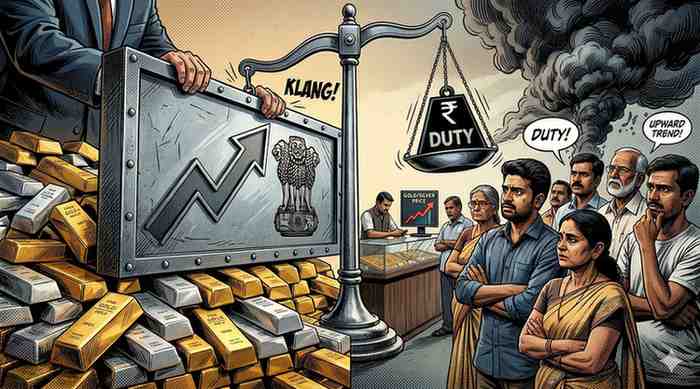
New Delhi, May 2026 — The Indian government has delivered a shock to the bullion market by hiking customs duties on gold and silver from 6% to 15%. The move, announced via a Finance Ministry notification, follows a direct appeal from Prime Minister Narendra Modi for citizens to postpone gold purchases and curb non-essential foreign spending to protect the national economy.
A Strategic U-Turn to Protect the Rupee
Just two years ago, the government had slashed duties to 6% to curb smuggling and support the jewelry industry. However, the global landscape has shifted drastically. With the West Asia conflict driving crude oil prices above $100 per barrel, the Indian Rupee has come under unprecedented pressure, recently crossing the ₹95 mark against the US Dollar.
By hiking the duty, the government is making a calculated bet: if gold becomes more expensive, imports will fall, saving billions in foreign exchange and providing a much-needed safety net for the falling Rupee.
The “Non-Productive” Drain on the Economy
Economists often label gold as a “non-productive import.” Unlike importing industrial machinery—which builds factories and creates jobs—imported gold typically ends up in private vaults or lockers. While it provides individual security, it offers zero direct contribution to India’s manufacturing capacity or GDP growth.
In the 2025-26 fiscal year, India spent a staggering $72 billion on gold imports, accounting for nearly 10% of the nation’s total import bill. Officials suggest that even a 40-50% reduction in gold demand could slash the Current Account Deficit (CAD) by up to $36 billion, effectively stabilizing the economy overnight.
The Ghost of 1991
The aggressive move is rooted in India’s historical economic trauma. During the 1991 Balance of Payments crisis, India was forced to physically airlift its gold reserves to Europe to pledge them for a bailout. That memory continues to haunt Indian policy-making. Whenever global oil prices spike and forex reserves are threatened, the government instinctively moves to protect its “war chest” of dollars—and gold is always the first target for reduction.
Impact on the Common Man and Industry
The immediate fallout will be felt in the pockets of the middle class:
- Wedding Budgets: Families planning weddings will see their costs skyrocket as jewelry becomes significantly more expensive.
- The Jewelry Sector: Jewelers and craftsmen are already expressing concern over job losses and a sharp decline in footfall.
- Digital Shift: Investors are being encouraged to move away from physical bars and coins toward Sovereign Gold Bonds (SGBs) or Gold ETFs, which do not require physical imports.
The Smuggling Risk
While the duty hike helps the macro-economy, it creates a massive incentive for the “shadow economy.” At a 15% tax rate, the profit margin for smuggling gold from hubs like Dubai, Nepal, and Sri Lanka becomes incredibly lucrative. Customs officials at major airports have been placed on high alert to prevent a resurgence of illegal syndicates and “hawala” networks that historically thrive under high-tariff regimes.
Bottom Line
The era of “cheap gold” is over, at least for the foreseeable future. The government has made its priority clear: protecting the Rupee and managing the oil bill takes precedence over the nation’s cultural obsession with bullion. For the Indian consumer, the message is blunt—if you want to save the economy, stop buying gold.
Leave a Reply