
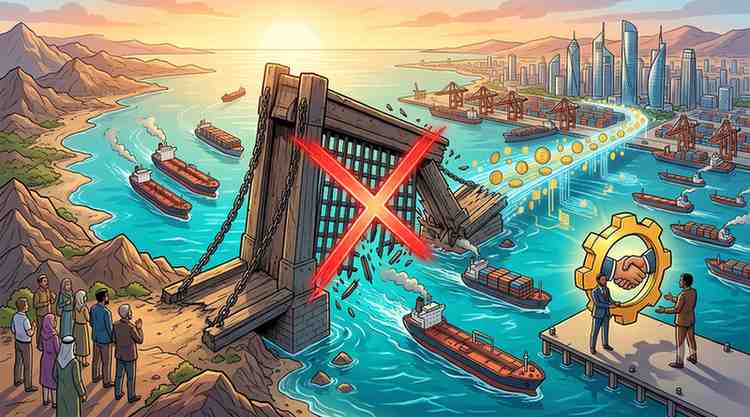
Washington D.C., July 2026 — In a dramatic, 24-hour about-face, U.S. President Donald Trump has shelved his highly controversial proposal to levy a 20% toll on international commercial ships passing through the Strait of Hormuz.
What was presented as a hard-nosed business move to reimburse American taxpayers has been scrapped in favor of a massive, multi-sector investment agreement with Gulf states.
Paying for Protection?
The initial White House proposal was simple: the U.S. Navy shoulders the burden of policing and securing the world’s most vital energy chokepoint, so the nations benefiting from that security should pay for it. Under the plan, any commercial vessel transiting the strait would have been forced to cough up 20% of its total cargo value.
Supporters viewed this as a pragmatist extracting fair compensation. Critics, however, pointed out the legal and economic absurdity: the plan directly violated international maritime law under the UN Convention on the Law of the Sea (UNCLOS), which explicitly guarantees free transit passage through international straits.
The Threat of a Global Domino Effect
The shipping industry and the United Nations raised immediate alarms. If the U.S. unilaterally bypassed international law to collect transit fees, a dangerous global precedent would be set:
- The Toll Booth Epidemic: Nations flanking other major maritime chokepoints could follow suit. Turkey could charge for the Bosporus, Egypt could add arbitrary entry fees outside the Suez Canal, and Malaysia or Indonesia could tax the critical Strait of Malacca.
- Hyper-Inflation: A 20% tariff on cargo value would immediately spike the cost of crude oil—shifting a $100 barrel of oil to $120. These costs would trickle down to global consumers, triggering massive inflation.
- Insurance Nightmares: Operating in a highly disputed, “taxed” zone would spike maritime insurance premiums, making shipping routes financially unviable.
The Deal: Trading Tolls for Gulf Capital
Faced with immediate international resistance and anger from traditional allies, Trump pivoted. Following direct negotiations, Gulf countries—including Saudi Arabia and the UAE—successfully lobbied to kill the toll. Their counter-argument was clear: they already purchase billions in American weaponry and host key U.S. military bases; taxing their exports would amount to double-billing.
Instead of paying a transit fee, these Gulf powers have agreed to direct massive investments from their multi-trillion-dollar sovereign wealth funds into domestic U.S. sectors. The targeted industries include:
- Artificial Intelligence (AI) and innovation
- Advanced manufacturing facilities
- Infrastructure projects and domestic energy
While the White House hails this as a major win that will create American jobs and boost tax revenues, the deal has an unintended casualty: developing nations like India. To fund their massive commitments to Washington, Gulf sovereign wealth funds are expected to withdraw or divert capital originally destined for emerging markets.
Pressure on Iran Remains
The removal of the 20% toll has done nothing to cool regional military tensions. Washington has made it clear that while friendly commercial vessels have escaped the 20% fee, the strict blockade against Iranian shipping remains fully active.
Bottom Line
Trump’s 24-hour toll plan was a high-stakes play of economic brinkmanship. While the immediate threat of a global shipping tax has been averted, the resulting deal has effectively locked Gulf wealth into American infrastructure, leaving developing allies to deal with the economic fallout.
Leave a Reply