
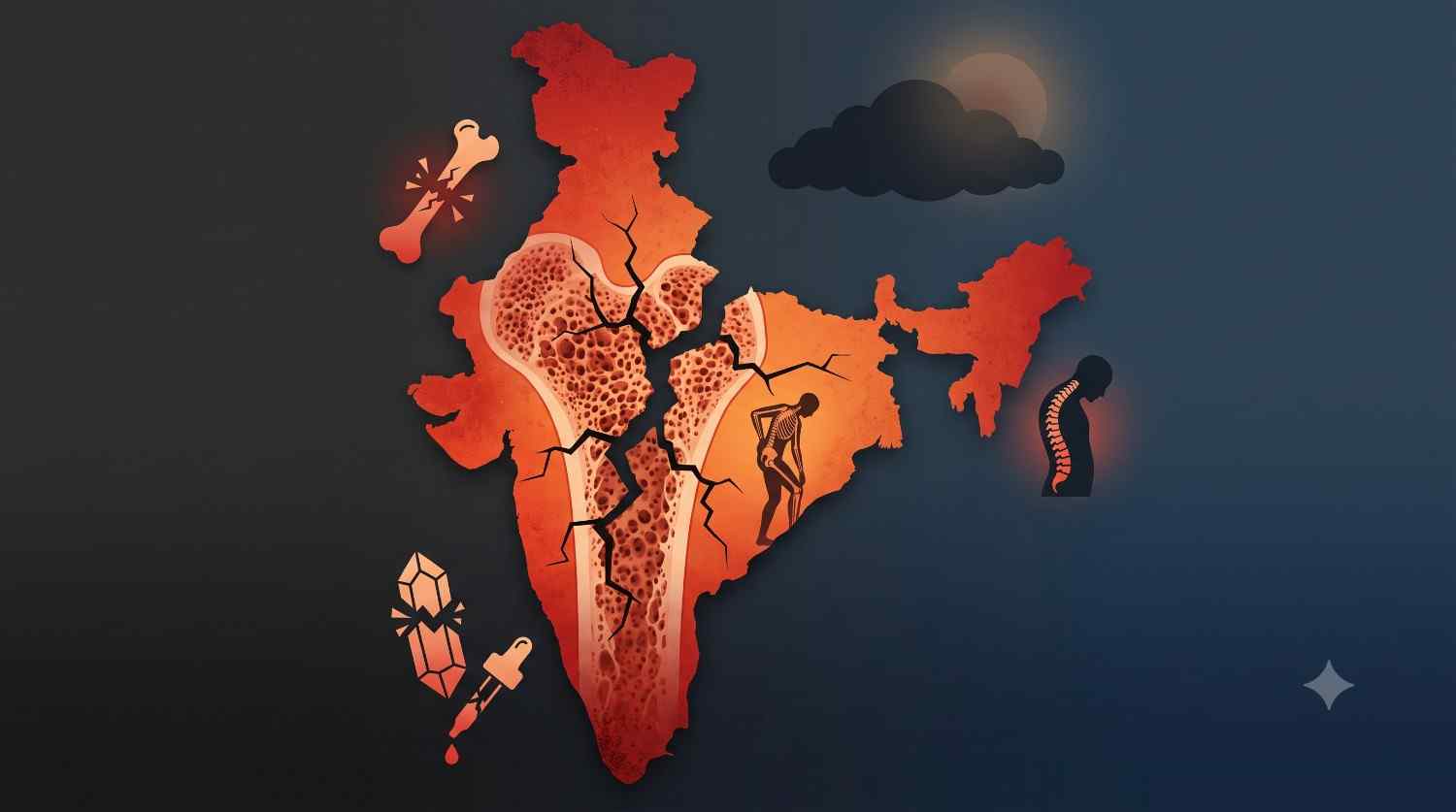
New Delhi, July 2026 — India’s dairy-rich food culture and year-round tropical sunshine have long masked a severe public health emergency. A silent epidemic is sweeping across the nation as millions of citizens unknowingly starve their own skeletal systems, pushing the country toward becoming the global capital of osteoporosis.
The Calcium Bank Run
While an adult body requires 1,000 to 1,200 mg of calcium daily to maintain healthy bone mass, recent data reveals the average Indian consumes just 429 mg—less than half of the biological requirement.
When the body faces this extreme dietary deficit, it enters a survival mode known as a “calcium bank run.” Because calcium is critical for vital functions like heart rhythm regulation, muscle contraction, and nerve signaling, the body treats the skeleton like an ATM. It actively withdraws stored calcium from the bones to keep other organs running, leading to silent bone depletion, osteopenia, and eventually severe osteoporosis.
The Vitamin D Paradox
Compounding the crisis is a striking irony: despite being a sun-drenched country, roughly 70% to 80% of Indians suffer from severe Vitamin D deficiency.
Vitamin D acts as the biological key required to unlock the gut and allow calcium to enter the bloodstream. Modern indoor working environments, rising urban air pollution that blocks UVB rays, and sedentary lifestyles have cut the population off from sunlight. Without Vitamin D, intestinal calcium absorption drops by a staggering 10% to 15%, rendering even calcium-rich diets largely ineffective.
The Anti-Nutrient Trap
The crisis is further aggravated by the structure of the traditional Indian diet. Heavy reliance on cereals like wheat and rice, alongside legumes, introduces high levels of phytates and oxalates into the digestive system.
These compounds act as anti-nutrients, chemically binding with the little calcium consumed to form insoluble compounds that the body simply flushes out. Furthermore, urban diets have seen a sharp decline in traditional calcium powerhouses like ragi and sesame (til).
Vulnerabilities and Hidden Fractures
The real-world toll is devastating: one in three women and one in eight men in India now suffer from osteoporosis. Post-menopausal women face the highest risk, as dropping estrogen levels accelerate bone loss.
The danger manifests heavily in elderly hip fractures, which carry high mortality rates due to subsequent immobility and infections. Alarmingly, the deficiency is now surfacing in children who spend their critical bone-building teenage years indoors in front of screens, cementing a weak skeletal foundation for life.
The Policy Gap
Unlike many Western nations that mandate routine DEXA scans for citizens over 65, India lacks a national screening program for bone health. Most patients only discover their condition after a minor, accidental fall results in a severe fracture.
While some states have introduced voluntary Vitamin D fortification in milk and edible oils, public health experts are calling for a unified, mandatory national food fortification mission—similar to India’s historic triumph with iodized salt.
Bottom Line
The crisis proves a terrifying biological reality: individuals can be well-fed yet completely malnourished. If India does not drastically shift its approach toward Vitamin D supplementation, traditional food preparation (like soaking grains to break down phytates), and active sun exposure, the healthcare system risks being crushed under millions of preventable fragility fractures, severely impacting future economic productivity.
Leave a Reply