
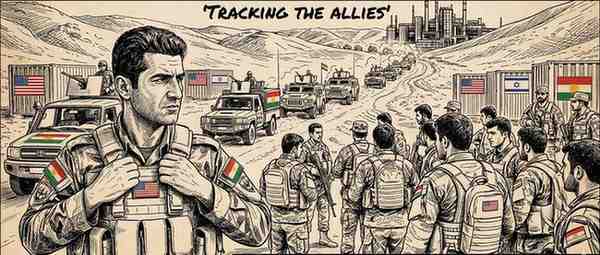
WASHINGTON/TEL AVIV, March 2026 — As the conflict in the Middle East deepens, a high-stakes military plan is emerging from Washington and Tel Aviv. Facing unexpectedly fierce retaliation from Tehran, the United States and Israel are reportedly pivoting toward a ground strategy that leverages an internal Iranian minority: the Kurdish population.
The strategy, led by the CIA, aims to arm and mobilize Kurdish militant groups to spark an anti-regime uprising and open a new domestic front within Iran.
The “Kurdish Connection”
The Kurds are one of the world’s largest ethnic groups without their own sovereign nation, with a population of 30 to 35 million spread across Iran, Iraq, Syria, and Turkey. In Iran, approximately 8 to 10 million Kurds live in the western provinces, including West Azerbaijan and the Kurdistan province.
Historically, this group has had a tense relationship with Tehran, having launched a major rebellion following the 1979 Revolution. Today, various militant groups—such as the KDPI and Komalat—continue to oppose the Islamic Republic from bases in northern Iraq.
A Proxy Strategy for a Massive Target
Geopolitically, Iran is far larger and more powerful than Iraq, making a traditional U.S.-led ground invasion exceptionally risky and costly. By mobilizing Kurdish “Peshmerga” and guerrilla fighters, the U.S. and Israel hope to:
- Divide the Iranian Military: Force Tehran to divert its elite Revolutionary Guard (IRGC) troops from the Persian Gulf to secure its western borders.
- Leverage Local Expertise: Utilize fighters with decades of experience in mountain warfare and guerrilla tactics who already have a presence on the ground.
- Intelligence Gathering: Access on-the-ground intelligence through Kurdish networks, a method Israel has reportedly used for years to monitor Iranian movements.
Current Developments on the Border
Reports indicate that Kurdish fighters are already gathering on the Iran-Iraq border, with the U.S. discussing logistical and air support for these factions. In response, some Kurdish factions within the Iranian military have even been called upon by their ethnic leaders to desert their posts and join the uprising.
However, the strategy is fraught with risk. Arming the Kurds could alienate Turkey, a key NATO ally that fiercely opposes Kurdish independence. Additionally, the region faces total destabilization if Kurdish rebellions expand into Iraq, Syria, and Turkey.
Bottom Line
The “multi-front strategy” is no longer just a theory. While the U.S. continues air strikes and cyber operations, the mobilization of a Kurdish ground force represents a significant escalation designed to topple the Iranian regime from within. Tehran has already responded by bombing Kurdish headquarters in Iraq and declaring that it is “ready” for any ground invasion.
Leave a Reply