
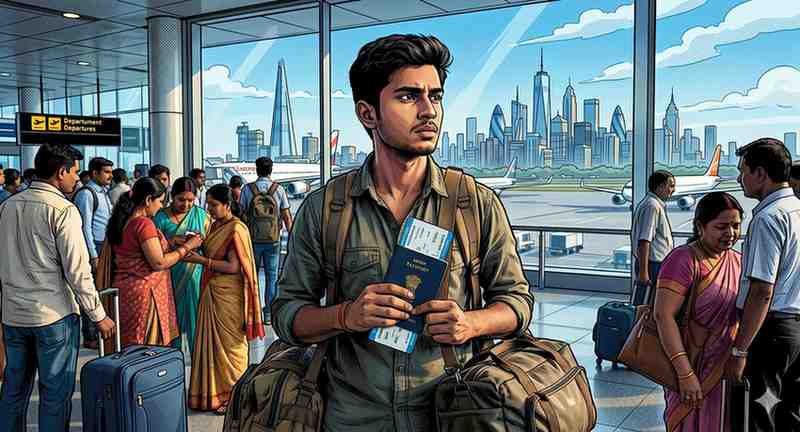
NEW DELHI, May 2026 — The dream of a “New India” is hitting a harsh geographic reality. While the nation produces millions of graduates annually, a deepening “skill-mismatch” and a lack of regional job diversity are forcing India’s youth into a silent, emotional exodus from their home states.
A recent discussion hosted by Brut India has pulled back the curtain on the internal migration crisis, revealing that for many, leaving home is no longer a choice—it is a survival tactic.
The “Diversity Deficit” in Local Economies
For young professionals in states like West Bengal, Assam, and Kerala, the problem isn’t just a lack of jobs, but a lack of the right jobs. Shinjini, a lawyer from West Bengal, noted that staying in Kolkata would have meant a stagnant career in traditional litigation. “There is hardly any diversity of jobs,” she explained, highlighting how policy think tanks and corporate law firms are almost non-existent outside of major hubs like Delhi [00:05:02].
In Assam, the struggle is purely financial. Zoya, a B.Com graduate, found that local CA firms offered “assistant” roles paying a mere ₹5,000 to ₹6,000 per month—a sum impossible to build a future on [00:28:08].
The Hidden Costs: Identity and Safety
Migration brings a paycheck, but it also brings a “tax” on identity. Alfred, who moved from Kerala, recounted the jarring secularism gap in the capital. He described the “pain” of being denied housing based on his surname. “I’ve been told to my face… ‘we don’t give rented houses to Muslims,'” he shared, noting that such overt discrimination was a foreign concept in his home state [00:10:01].
For women, the migration is even more complex. Shinjini highlighted a “constant judgment” of single women living alone in Delhi, contrasting it with the safety she felt in Kolkata even at 2:00 AM [00:12:05].
The Emotional Toll: Dreaming in the Past
The most heartbreaking cost of this economic migration is emotional. Many young migrants find themselves stuck in a “time warp.” Zoya spoke of dreaming about her younger sister as a seven-year-old child, only to wake up and realize she is now a high school graduate. “I just left home and then everything changed,” she said [00:22:54].
The high cost of travel—reaching ₹20,000 for a round trip to Assam or five days of train travel to Kerala—effectively turns home into a luxury that many can only afford once a year [00:14:52].
Politics vs. Reality: Promises on Paper
As election seasons roll around, political parties across India consistently promise “crores of jobs.” However, the youth on the ground remain skeptical. They are calling for:
- Infrastructure over Slogans: Bringing MNCs and industries like semiconductors to states like West Bengal and Assam to stem the brain drain [00:32:47].
- Sectoral Growth: Facilitating the developmental and service sectors in states like Kerala, where “ease of doing business” has improved but diverse roles remain scarce [00:30:42].
- Dignified Living: Shifting the focus from mere “government security” to high-ambition roles that allow for a global standard of living [00:36:15].
Bottom Line
India’s migration story is shifting. It is no longer just the “unskilled labor” moving for survival; it is the highly educated “Gen Z” fleeing a lack of opportunity. While they find financial success in the big cities, they leave behind aging parents and a sense of belonging. The message to policymakers is clear: unless jobs are decentralized, India’s youth will continue to build everyone’s dreams except their own.
Leave a Reply