
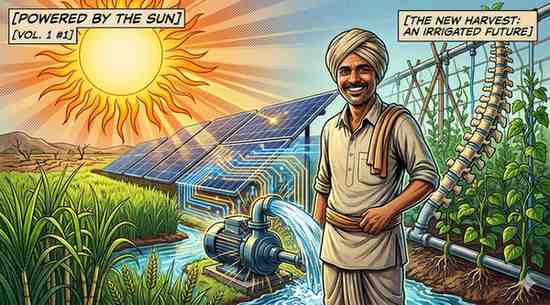
New Delhi, April 2026 — For generations, the hum of a diesel engine was the soundtrack of the Indian farm—a sound that signaled both growth and a draining wallet. Today, that sound is being replaced by the silent efficiency of solar panels. The Pradhan Mantri Kisan Urja Suraksha evam Utthaan Mahabhiyan (PM-KUSUM) has crossed a historic threshold, with over 21 lakh farmers now generating their own power.
What began as a subsidy program has evolved into a full-scale energy revolution, fundamentally altering the economics of the Indian village.
Breaking the Diesel Dependency
Irrigation has historically been the farmer’s greatest gamble. Diesel pumps offered reliability but came with crushing operational costs and a heavy carbon footprint. The PM-KUSUM scheme addresses this by putting the power of the sun directly into the hands of the tiller.
By transitioning to solar-powered pumps, farmers are no longer at the mercy of fluctuating fuel prices or erratic grid power schedules. The result is a dual victory: reliable irrigation and zero fuel costs.
Beyond Irrigation: The Farmer as an Energy Entrepreneur
The scheme is structured around three innovative components that go beyond simple water pumping:
- Solar Pumps: Direct replacement of diesel engines for standalone irrigation.
- Grid-Connected Systems: Existing electric pumps are being “solarized,” allowing farmers to meet their needs and sell surplus power back to the grid.
- Decentralized Solar Plants: Small-scale solar plants are being built on barren or uncultivable land, turning “waste” land into a steady source of monthly income.
This shift transforms the farmer from a consumer of expensive energy into a producer of clean energy, adding a vital second stream of revenue to the rural household.
Financing the Future of Fields
The primary hurdle for solar adoption has always been the high upfront cost. To bridge this gap, the government has introduced a robust support system of subsidies and easy financing. By lowering the entry barrier, the scheme has made high-tech solar infrastructure accessible to small-scale farmers who previously could never have dreamed of such technology.
The Road to “Atmanirbhar” Agriculture
Industry experts suggest that the integration of 2.1 million farmers is just the beginning. The PM-KUSUM scheme isn’t just about water; it’s about stability.
- For the Farmer: It provides financial immunity against rising energy costs.
- For the Environment: It drastically reduces the agricultural sector’s carbon emissions.
- For the Nation: It moves India closer to its goal of energy self-reliance (Atmanirbhar Bharat).
Bottom Line
The era of “expensive uncertainty” in Indian farming is fading. As sunlight becomes the primary fuel for the country’s fields, the PM-KUSUM scheme is proving that the most sustainable way to power a nation is to empower its farmers. The masks of high-cost farming are off: the future of Indian agriculture is green, solar-powered, and self-sustaining.
Leave a Reply