
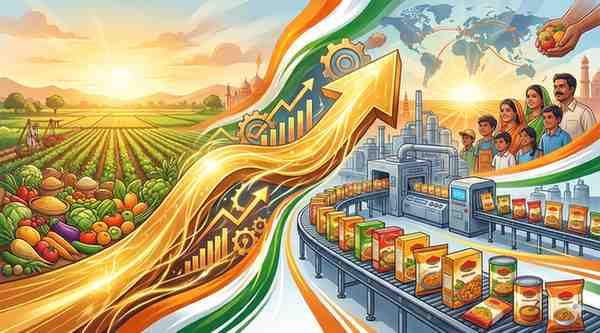
New Delhi, April 2026 — India’s food processing sector is undergoing a massive structural transformation, emerging as a global powerhouse driven by strategic policy interventions. At the heart of this revolution is the Production Linked Incentive (PLI) Scheme for the Food Processing Industry (PLISFPI), which is reshaping how the nation processes, consumes, and exports food.
The Multi-Billion Crore Push
With a substantial financial outlay of ₹10,900 crore, the PLI scheme was designed to bolster value addition and expand industrial capacity. The objective is clear: to make Indian food brands globally competitive while ensuring that the benefits of industrialization reach the grassroots level.
The financial momentum is already evident. By February 2026, the scheme successfully attracted an investment of ₹9,027 crore. To further accelerate this growth, the government has already distributed over ₹2,162 crore in incentives to eligible manufacturers, fueling a cycle of reinvestment and expansion.
Capacity and Employment: The Real Impact
The impact of these investments is visible in the physical infrastructure being built across the country. Through the PLI framework, India has added a staggering 34 lakh metric tonnes of processing and preservation capacity annually. This increase in capacity is critical for reducing post-harvest losses and ensuring that farmers’ produce is utilized efficiently rather than going to waste.
Beyond infrastructure, the scheme has become a major engine for human capital development. It has generated over 3.39 lakh employment opportunities, providing stable livelihoods and fostering a new generation of skilled workers in the food technology and logistics sectors.
Global Aspirations and Export Growth
India is no longer just a primary producer of raw agricultural goods; it is fast becoming a preferred hub for processed food products. The PLI scheme has played a pivotal role in strengthening the “Made in India” brand on international shelves. By empowering local companies to meet stringent global quality standards, the sector has witnessed a consistent and robust rise in the export of processed food items.
Integration and Development
This scheme is not just about subsidies; it is about building a robust food ecosystem. By integrating modern processing techniques with traditional farming, the initiative is driving:
- Value Addition: Moving from raw crops to high-value packaged goods.
- Global Integration: Aligning Indian manufacturing with international supply chains.
- Sustainable Growth: Monitoring progress to ensure long-term viability and food security.
Bottom Line
The PLI scheme for food processing is more than a financial incentive; it is a blueprint for national resilience. By merging massive investment with job creation and a focus on exports, the initiative is ensuring that India’s food ecosystem is self-reliant and future-ready. The era of being a mere raw material exporter is ending—India is now processing its way to global leadership.
Leave a Reply