
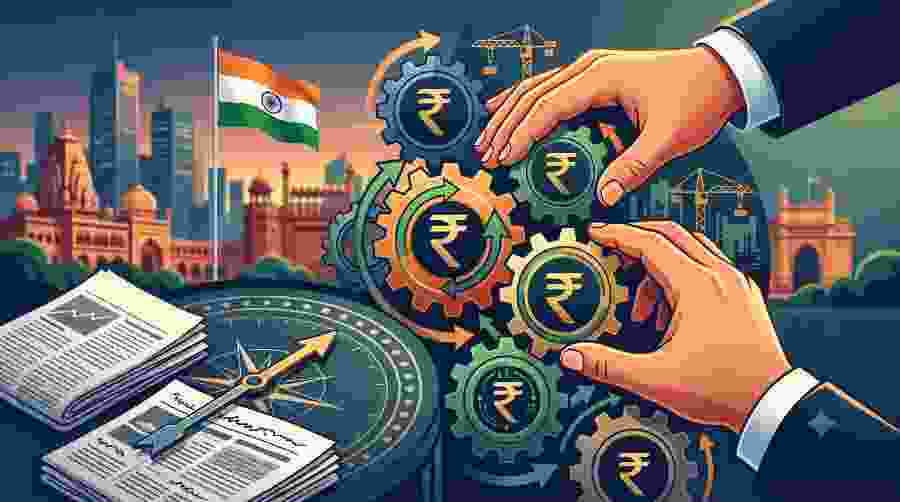
Recent editorials highlight significant shifts in India’s economic policy. These changes could reshape various sectors, impacting millions of Indians.
New Delhi, August 2026 — India’s economic landscape is poised for transformation as recent editorials identify pivotal policy changes that could influence growth trajectories across sectors.
What Is Happening?
Recent discussions in Indian editorials have focused on the government’s approach to economic reforms. Analysts are debating the implications of these reforms on investment, employment, and inflation. As the narrative unfolds, the potential for both opportunities and challenges appears evident.
Why Is This Important for Common Indians?
Economic policies directly affect the daily lives of citizens. Changes in taxation, subsidies, and investment can alter job availability and purchasing power. For the average Indian worker and student, these shifts will determine their financial stability and future prospects.
What Do Experts Say?
Experts from various fields are weighing in on the anticipated changes. Many believe these reforms could lead to increased foreign investment, benefiting the economy. However, some caution against potential pitfalls, urging the government to ensure that growth does not come at the expense of social welfare.
What Should You Expect Next?
In the coming months, the government is expected to roll out detailed frameworks for these reforms. Stakeholders across sectors will be closely monitoring the situation. Continued dialogue between the government and the public will be crucial for successful implementation.
- The GDP growth rate is projected to accelerate to 7% by the end of 2026.
- Foreign direct investment (FDI) is expected to rise by 15% in the next fiscal year.
- Unemployment rates may decrease by 2% as new jobs are created.
- Inflation could stabilize around 4%, providing relief to consumers.
The impact of these changes will be felt across the board. Workers may see new job opportunities arising from increased investment. Students could benefit from enhanced educational resources due to government funding, while farmers might receive better prices for their produce due to improved market conditions.
आगे क्या? (What’s Next) The trajectory of these economic reforms will depend on public reception and the government’s responsiveness to feedback. As policies unfold, investors and citizens alike will need to remain vigilant. The effectiveness of these reforms will ultimately shape India’s economic future for years to come.
Leave a Reply