
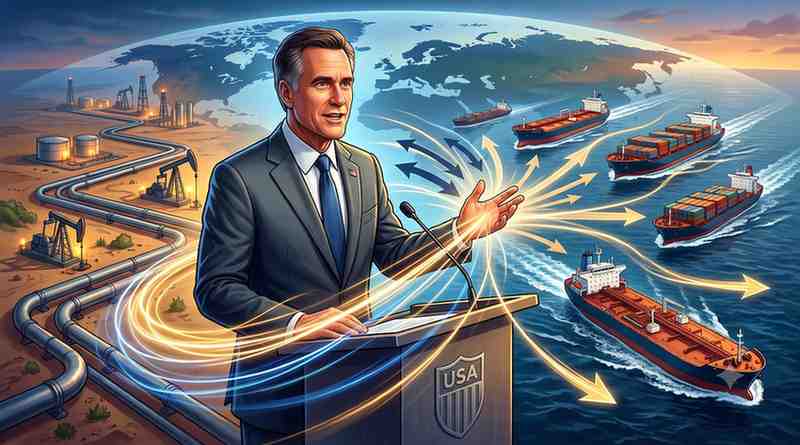
US Secretary of State Marco Rubio’s recent comments indicate that oil trade routes remain open, easing supply concerns. This is significant for global markets and could affect fuel prices in India.
New Delhi, August 2026 — US Secretary of State Marco Rubio confirmed that critical oil trade routes are operational, signaling a potential stabilization in the global oil market.
What Is Happening?
Marco Rubio’s announcement comes amid heightened concerns over oil supply disruptions. The statement assures that key maritime routes, particularly the Strait of Hormuz, are functioning normally. This development is expected to have far-reaching implications for oil prices globally.
Why Is This Important for Common Indians?
For the average Indian, fluctuations in oil prices directly impact daily life. Higher oil prices can lead to increased transportation costs, affecting everything from food prices to household expenses. As India is a major importer of crude oil, stability in oil supply is crucial for economic growth.
What Do Experts Say?
Energy analysts believe that the US’s reassurance about oil supply stability could alleviate market fears. However, they warn that geopolitical tensions still pose risks to oil prices. Experts suggest that while short-term stability is promising, long-term sustainability requires careful monitoring of global relations.
What Should You Expect Next?
In the coming days, we may witness a slight dip in fuel prices in India due to the positive news from the US. However, any further geopolitical tensions could quickly reverse these gains. Consumers should stay informed about global oil trends as they can influence local prices.
- Oil import dependency of India stands at approximately 85%.
- Crude oil prices have fluctuated between $70 and $80 per barrel in recent months.
- The Strait of Hormuz is a critical route, with 20% of the world’s oil passing through.
- India’s fuel prices have been directly linked to global oil trends.
- Experts predict a 2-3% fluctuation in fuel prices based on recent developments.
The stability in oil supply routes is crucial for Indian workers, students, and investors. A decrease in fuel prices could benefit daily commuters and farmers by reducing transportation costs. Investors in the energy sector might see improved forecasts, while students may enjoy lower costs for commuting to educational institutions.
आगे क्या? (What’s Next) The outlook for oil prices hinges on international relations and market dynamics. If geopolitical tensions remain low, we could experience a sustained period of stable or even lower fuel prices in India. However, any sudden changes in global politics could disrupt this balance, leading to unpredictable shifts in the oil market.
Leave a Reply