
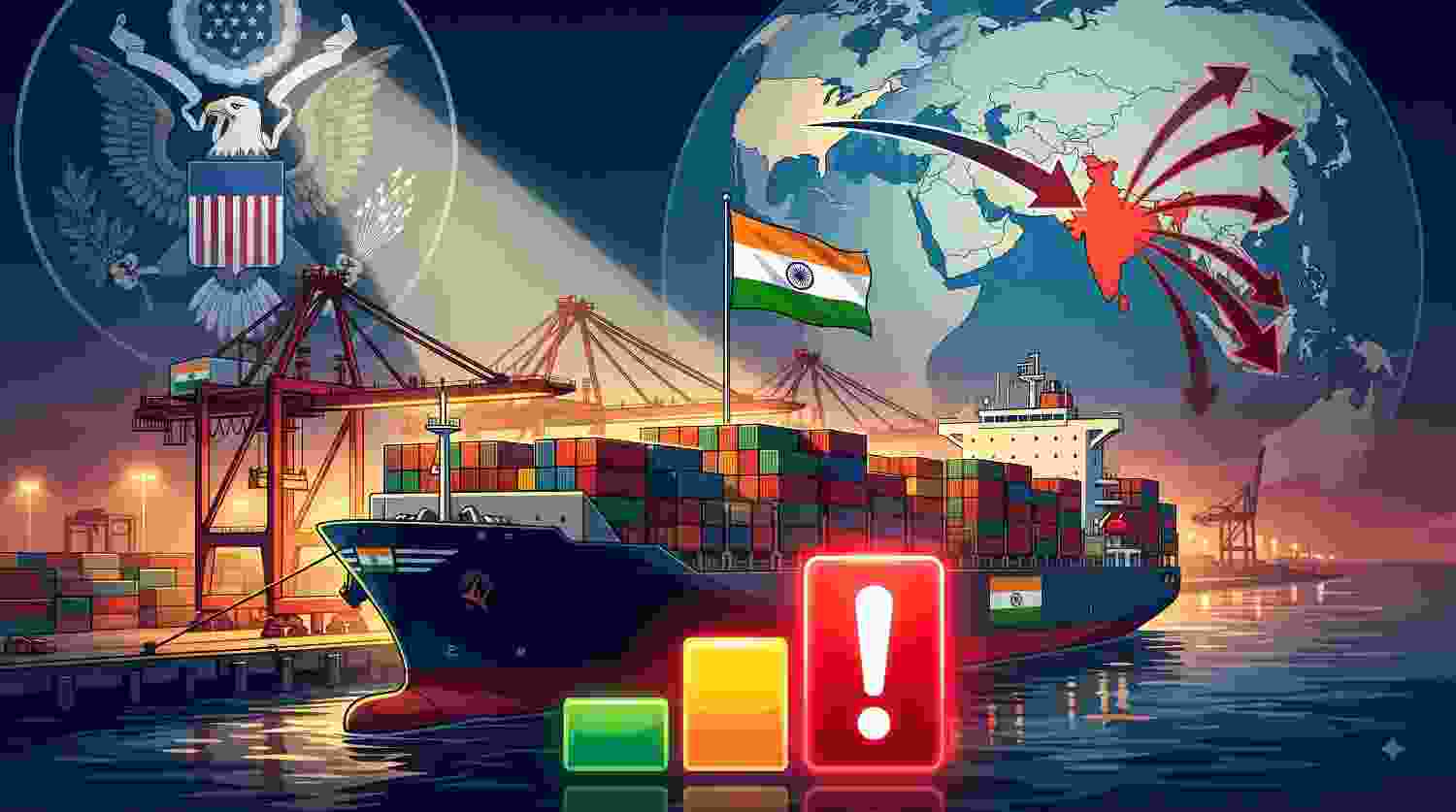
The United States has categorized India as a Tier 1 transshipment risk, raising concerns about trade regulations. This classification could impact various sectors, from logistics to investments.
New Delhi, August 2026 — The United States has designated India as a Tier 1 transshipment risk, a significant change that could reshape trade dynamics. This classification means that the US perceives a higher risk of illicit trade activities involving goods that pass through Indian ports.
What Is Happening?
The US decision comes amid growing scrutiny of global supply chains. India has been seen as a crucial hub for transshipment, particularly for goods heading to and from Southeast Asia. Such a classification may lead to stricter customs regulations for shipments involving India.
Why Is This Important for Common Indians?
This classification could have a ripple effect on trade and commerce in India. For ordinary citizens, it might lead to increased prices for imported goods as companies pass on compliance costs. Moreover, Indian exporters could face additional scrutiny, complicating their ability to do business with the US.
What Do Experts Say?
Experts warn that this classification could hinder India’s aspirations to become a global manufacturing hub. They argue that it might deter foreign investments, which are crucial for job creation. Some experts believe that India needs to enhance its regulatory framework to address these concerns effectively.
What Should You Expect Next?
In the coming months, businesses and government agencies may need to adapt to a new regulatory environment. Expect tighter customs checks and potential delays in shipments involving India. The government may also ramp up efforts to improve trade relations with the US.
- The US accounts for approximately 15% of India’s total trade.
- India’s logistics sector is valued at over $200 billion.
- Stricter regulations could lead to a 5-10% increase in import costs.
- Over 300,000 jobs linked to exports might be at risk.
For the average Indian, the implications are significant. Import prices could rise, affecting everything from electronics to clothing. Students might face higher fees for foreign educational materials, while farmers could see increased costs for imported fertilizers. Investors may become cautious, leading to slower economic growth.
आगे क्या? (What’s Next) The classification poses challenges for India, necessitating a proactive approach to enhance trade security. The Indian government might engage with US authorities to address concerns and mitigate risks. By improving regulatory frameworks, India can aim to regain trust and ensure smoother trade relations moving forward.
Leave a Reply