
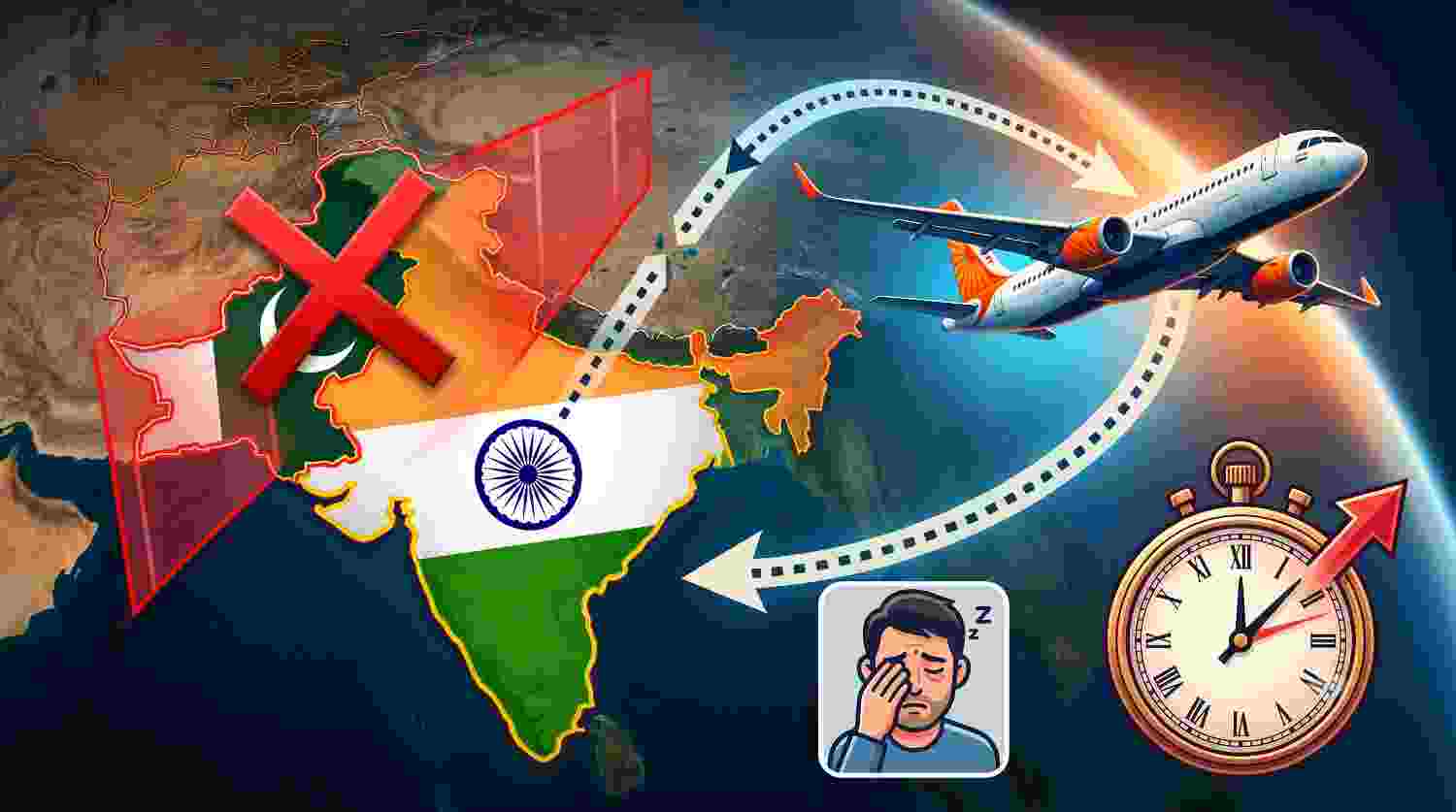
Pakistan’s ongoing airspace ban is presenting significant challenges for Indian airlines. This restriction not only affects flight routes but also increases operational costs, impacting ticket prices for travelers.
New Delhi, August 2026 — As Pakistan extends its airspace ban, Indian airlines are grappling with longer flight routes and increased operational expenses, which could lead to higher fares for passengers.
What Is Happening?
The ban on Indian flights over Pakistan has been in place since 2019, but its recent extension has intensified the situation. Airlines like Air India and IndiGo are now forced to reroute flights, which adds time and fuel costs to their operations. This change is particularly disruptive for international flights that previously utilized shorter paths over Pakistani airspace.
Why Is This Important for Common Indians?
This ban has direct implications for Indian travelers, especially those flying to destinations in Europe and the Middle East. Increased flying times mean passengers may face longer layovers and higher ticket prices. For the average Indian worker or student, this translates to more time spent traveling and potentially higher costs for airfare.
What Do Experts Say?
Aviation experts warn that the extended ban could lead to a domino effect on pricing and service quality in the airline industry. According to industry analysts, the additional fuel costs and longer routes could raise ticket prices by 10-15%. Additionally, they highlight the need for diplomatic efforts to resolve airspace issues swiftly.
What Should You Expect Next?
As the ban persists, travelers should prepare for fluctuating ticket prices and possible changes to flight schedules. Airlines are likely to respond by increasing fares to cover losses incurred from rerouting. Passengers are encouraged to book in advance and stay updated on any changes from their airlines.
- Pakistan’s airspace ban has been in effect since 2019.
- Flight rerouting can increase operational costs by 10-15%.
- Travel times may increase by several hours.
- Airlines are expected to raise ticket prices to cover losses.
- Travelers should book flights early to avoid price hikes.
The impact of this airspace ban is felt most acutely by common Indians. Workers traveling for business may find their schedules disrupted, while students studying abroad may face higher costs and longer travel times. Investors could also see potential declines in the tourism sector due to increased travel expenses.
आगे क्या? As negotiations continue, the hope is that diplomatic channels will lead to a resolution. However, until then, it is crucial for travelers to stay informed and prepared for the ongoing challenges in the aviation sector.
Leave a Reply