
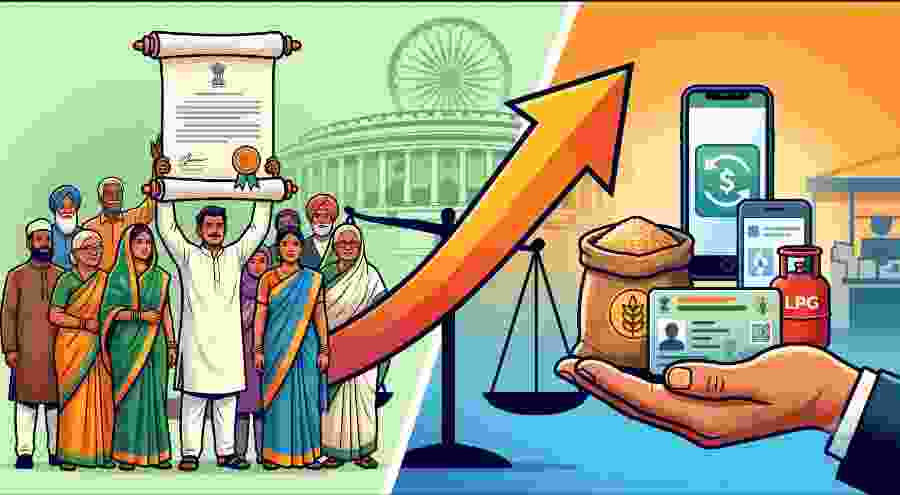
India’s welfare policies are evolving from a focus on rights to a system emphasizing benefits for individuals. This shift raises questions about equity and long-term impacts on citizens.
New Delhi, August 2026 — The Indian government has changed its approach to welfare, moving from creating rights holders to defining beneficiaries. This shift has sparked a significant debate about the implications for social justice and individual empowerment.
What Is Happening?
The recent discourse surrounding India’s welfare policies has highlighted a shift in focus. Instead of prioritizing citizens as rights holders, the government is now framing welfare as a series of benefits. This change can reshape how services are delivered and perceived by the public.
Why Is This Important for Common Indians?
This shift impacts the average Indian by altering their relationship with the state. Workers, students, and farmers may find themselves dependent on government benefits rather than secure rights. This could lead to a sense of insecurity as entitlements become privileges rather than inherent rights.
What Do Experts Say?
Experts warn that reclassifying citizens as beneficiaries could undermine long-term social justice. They argue that rights-based approaches empower individuals to demand accountability. However, a benefits-focused model risks creating a culture of dependency.
What Should You Expect Next?
As the government continues to roll out its new welfare measures, citizens might see changes in how services are accessed. Expect an increase in means-tested programs that may exclude marginalized populations. This could lead to growing disparities in access to essential services.
- Over 600 million Indians benefited from welfare schemes in 2025.
- Government spending on social welfare was approximately ₹3 lakh crores in the last fiscal year.
- The number of households receiving direct cash transfers has tripled since 2020.
- Welfare policies are increasingly tied to performance metrics for beneficiaries.
This reorientation of welfare policies has a direct impact on various demographics. For workers, it may lead to job insecurity as benefits become conditional. Students might face challenges in accessing educational resources, while farmers may struggle with fluctuating subsidies. Investors could experience uncertainty as government priorities shift, affecting market stability.
आगे क्या? (What’s Next) — The outlook for India’s welfare policies suggests a need for careful monitoring. As citizens navigate this new landscape, the challenge will be to advocate for rights while adapting to the benefits framework. Ensuring that all Indians retain access to essential services without falling into dependency will be crucial for sustainable development.
Leave a Reply