
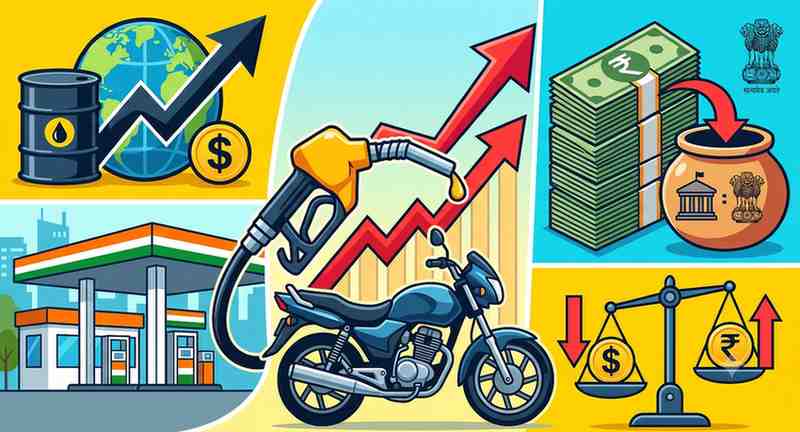
Petrol prices in India are surging due to multiple factors including global oil prices and domestic tax structures. This situation poses economic challenges for the average Indian, impacting daily expenses and overall inflation.
New Delhi, August 2026 — Petrol prices have hit an all-time high, reaching ₹120 per litre in major cities, causing widespread concern among consumers.
What Is Happening?
The price of petrol in India has seen a steep increase over the last few months. This rise is attributed to fluctuating global oil prices, which have surged due to geopolitical tensions and supply chain disruptions. Additionally, local taxation policies exacerbate the situation, making fuel costlier for Indian consumers.
Why Is This Important for Common Indians?
The increase in petrol prices is significant for the average Indian as it directly affects daily life. Higher fuel costs lead to increased transportation expenses, which can ripple through the economy, raising prices on goods and services. For workers, students, and farmers, this means tighter budgets and reduced purchasing power.
What Do Experts Say?
Economists warn that the rise in petrol prices could lead to higher inflation rates in India. They point out that as fuel costs rise, the prices of essential goods like food and household items are likely to follow suit. Experts suggest that without intervention, this could strain household finances across the country.
What Should You Expect Next?
Consumers should brace for further fluctuations in petrol prices as global oil markets remain volatile. The Indian government may need to reconsider its tax policies to alleviate the burden on citizens. Additionally, there could be calls for increased public transportation investments to provide affordable alternatives.
- Petrol prices have risen to ₹120 per litre in major Indian cities.
- Global oil prices have increased by over 30% in the past six months.
- India’s petrol tax is among the highest in the world, contributing to local price hikes.
- Experts predict that inflation could rise by 2-3% if petrol prices continue to increase.
- Public sentiment is increasingly in favor of government intervention to control rising costs.
The rising petrol prices are likely to have a profound impact on various sectors. Workers commuting to their jobs may face higher transportation costs, students might struggle with increased travel expenses, investors may see market volatility, and farmers could experience higher costs for agricultural supplies. The cumulative effect could lead to a slowdown in economic growth if not addressed promptly.
आगे क्या? The outlook for petrol prices remains uncertain as global factors play a significant role. If the government takes proactive measures to adjust taxes and support consumers, there may be some relief. However, continued global instability could keep prices elevated, affecting the economy for the foreseeable future.
Leave a Reply