
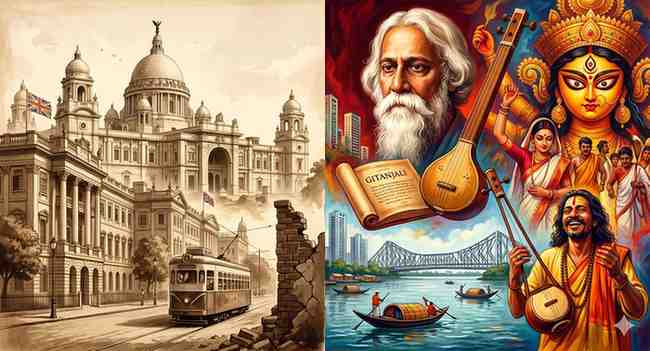
Kolkata, April 2026 — From its origin as the “Jewel in the Crown” of the British Empire to its enduring status as India’s intellectual North Star, West Bengal’s history is a saga of immense wealth, revolutionary thought, and traumatic resilience.
A new retrospective explores the paradox of Bengal: how a land that once dictated the political fate of the subcontinent lost its administrative capital to Delhi, yet remained an undefeated titan of art, music, and social progress.
The Rise and Fall of the Imperial Capital
Bengal’s story is rooted in the ancient kingdom of “Banga,” evolving over 4,000 years into a region so prosperous it was known as the “Paradise of Nations”. The definitive turning point came in 1757 at the Battle of Plassey, where the British exploited internal betrayals to defeat Nawab Siraj-ud-Daulah, effectively handing the keys of the region to the East India Company.
Kolkata subsequently rose to become the capital of British India. However, the 1905 Partition of Bengal—a tactical move by Lord Curzon to fracture the province along religious lines—ignited a swadeshi movement so fierce it forced the British to reverse the decision in 1911. In a strategic move to insulate the government from Bengali intellectual radicalism, the British shifted the national capital to Delhi that same year.
A Renaissance of Thought and the “Ghoti-Bangal” Divide
While it lost its administrative crown, Bengal gave birth to a psychological and cultural “sovereignty” known as the Bengal Renaissance. Led by Raja Ram Mohan Roy, Ishwar Chandra Vidyasagar, and Swami Vivekananda, this movement turned the region into a global beacon of progressive thought.
This intellectual height was later met with the heartbreak of 1947. The province was sliced in two: West Bengal stayed with India, while the East became East Pakistan. This sparked a massive refugee crisis that birthed a new social identity—the divide between the “Ghoti” (original residents) and the “Bangal” (displaced people from the East), a distinction that today manifests in friendly rivalries over food, accents, and football.
A Global Becon of Art and Sensory Legacy
Post-independence, Bengal traded political dominance for cultural immortality. In cinema, Satyajit Ray earned an Oscar and global reverence, while the music of the Baul singers and the literature of Rabindranath Tagore continued to define the Bengali soul.
The state’s modern identity is defined by a sensory richness:
- The Palette: Iconic flavors like Shorshe Ilish and Chingri Macher Malaikari, balanced by the delicate sweetness of the Sandesh.
- The Spirit: The rhythmic Dhunuchi dance and the fragrance of Shiuli flowers during Durga Puja—a festival now globally recognized as an intangible heritage of humanity.
The Resilience of the “City of Joy”
Today, Kolkata remains the “City of Joy,” anchored by its slow-moving trams, iconic yellow taxis, and the intellectual tradition of “Adda”—unhurried conversation that shapes the air of its streets. From the Himalayan peaks to the shores of the Bay of Bengal, the state has remained in motion, proving that while power can be moved, a legacy cannot.
Bottom Line
The history of Bengal is a lesson in resilience: a province that lost its capital but never its crown. By choosing to lead through culture rather than just governance, Bengal remains a reminder that a nation’s heart is often found not in its halls of power, but in its music, its food, and its uncompromising voices.
Leave a Reply