
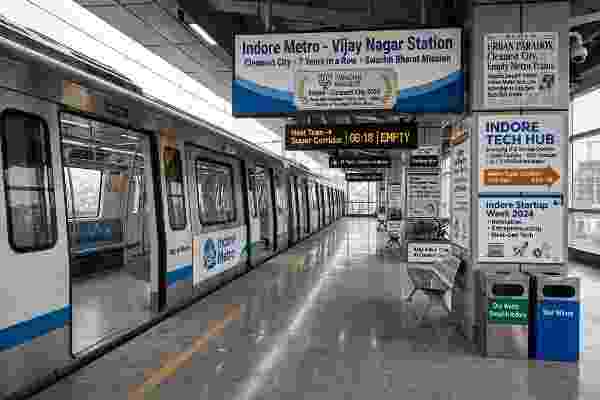
Indore, November 2026 — India’s cleanest city is facing an uncomfortable reality check. While Indore’s spotless streets have made it a national benchmark, empty metro trains and a modest tech footprint reveal that cleanliness alone cannot build a powerhouse economy.
Spotless Streets, Empty Trains After climbing from 25th place in 2016 to winning Swachh Survekshan eight consecutive times by July 2025, Indore pulled so far ahead that the government placed it in a separate “Super Swachh League”.
Yet the Indore Metro tells a starkly different story. After its initial 6-kilometer stretch opened in May 2025, crowds vanished once free rides ended, forcing authorities to temporarily halt commercial runs by February 2026. Even after an expanded 17-kilometer corridor launched in September 2026, trains built for 300 passengers averaged just 24 riders per trip. Monthly ticket revenue hovered around ₹30 lakh—less than the system’s electricity bill.
What Lies Beneath the Surface Visible cleanliness has also masked deeper civic cracks. Between December 2025 and February 2026, contaminated tap water in the Bhagirathpura locality claimed 36 lives. The tragedy exposed a troubling divide: pristine roads above ground, but neglected water and sewage pipelines below.
Can Indore Become the “Next Pune”? Indore has real assets—an IIT and IIM, the Pithampur automotive hub, and expanding Super Corridor campuses for TCS and Infosys, which opened a 3.3-lakh-square-foot AI and cloud block in September 2026. Its Special Economic Zones also recorded ₹2,400 crore in exports between April and October 2025.
Compare that with Pune, however, and the gap is enormous. Pune generates roughly ₹1 lakh crore in IT exports, houses over 360 Global Capability Centres, and employs 5.5 lakh tech professionals. Crucially, Pune flourished over four decades on Mumbai’s economic overflow just 150 kilometers away. Located nearly 590 kilometers from Mumbai, Indore has no neighboring megacity to feed its growth.
A New Blueprint for Central India Urban planners argue Indore should stop trying to copy Pune and instead anchor its own regional cluster:
- Regional Planning: Develop Indore, Pithampur, Dewas, and Ujjain together as one unified economic corridor.
- Transit Before Tracks: With 39% of road traffic on two-wheelers and only 19% using public transport, the metro needs feeder buses, parking, and airport connectivity.
- Talent & Infrastructure: Retain local engineering graduates while overhauling underground water and sewage networks.
Cleanliness Is the Start, Not the Destination Indore already accomplished what few Indian cities have: changing citizen behavior at scale. If it channels that same civic discipline into unseen infrastructure, transit, and regional jobs, it will not need to become the next Pune—it can emerge as Central India’s own economic engine.
Leave a Reply