
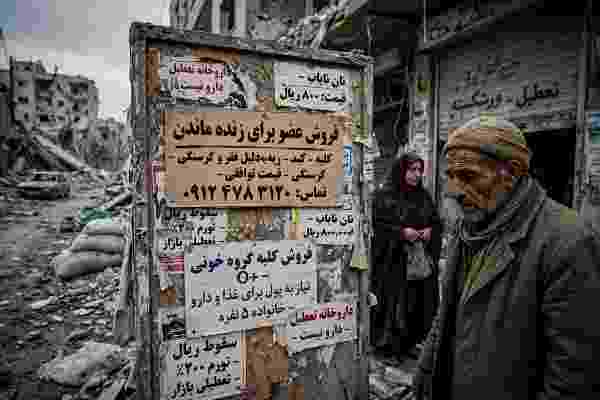
Tehran, November 2026 — Prolonged war and a collapsing economy have pushed ordinary Iranians into an unthinkable survival market: selling their own organs online. What began decades ago as a state-regulated kidney donation program has spiraled into an unregulated, desperate trade on messaging apps.
600 Listings on Telegram An investigation by Iran International examined roughly 600 advertisements posted on Telegram between late May and late October. The findings reveal a stark shift: one in three sellers offered more than one body part.
The breakdown includes 498 kidneys, 279 bone marrow offers, 51 livers, 15 testicles, and two corneas. Behind the numbers are everyday citizens—a clothing businessman buried in war debt, a father trying to secure his daughter’s future, renters unable to afford housing, and a single mother of two struggling to cover daily household costs. Many appear unaware of the major surgical risks and long-term health consequences involved.
Why the Economy Broke Three compounding shocks have stripped low-income households of their purchasing power:
- Ongoing War: Military conflict following the February 28 U.S. and Israeli strikes has damaged infrastructure, disrupted industry, and chilled consumer spending. Reports of potential renewed U.S. strikes under Donald Trump have only deepened market anxiety.
- Heavy Sanctions: U.S. restrictions on oil exports, banking, and shipping have choked off the foreign exchange Iran relies on to import food, medicine, and machinery.
- 89% Inflation: As the Iranian rial depreciates, import costs have surged, driving October inflation to 89 percent and leaving fixed-income families unable to get by.
From Regulated Model to Black-Market Desperation Iran has operated a formal, state-regulated kidney donation system since 1988 to address transplant shortages through medical screening and structured compensation. Even that framework drew criticism after a 2024 academic study confirmed most donors came from impoverished households.
Today’s surge bypasses those guardrails completely. Sellers are advertising multiple vital organs without medical screening, legal oversight, or guaranteed payment.
Global Rules vs. Ground Reality The trend directly violates World Health Organization guiding principles, which mandate that organ donation remain voluntary, informed, and never a source of financial gain. Despite a 2024 World Health Assembly resolution urging stronger protections against exploiting vulnerable populations, economic collapse continues to outpace regulation.
The Human Cost of Collapse When inflation wipes out wages and conflict stalls livelihoods, desperation fills the vacuum. In Iran, the surge in online organ listings is no longer just a medical ethics issue—it is the stark human price of an economy pushed past its breaking point.
Leave a Reply