
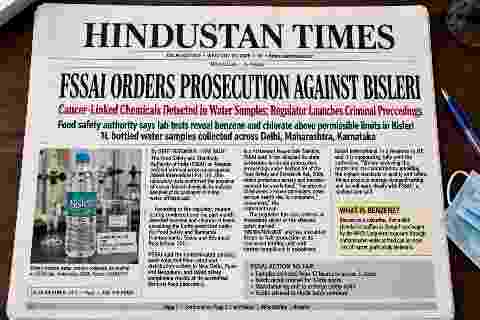
New Delhi, November 2026 — For millions of Indians, “Bisleri” is not just a bottled water brand—it is the default word for safe drinking water. That decades-old trust is now under intense scrutiny after the Food Safety and Standards Authority of India (FSSAI) announced prosecution proceedings against Bisleri International on November 22 over cancer-linked chemicals detected in its packaged water.
Failed Tests at the Source
What makes the regulatory crackdown especially alarming is where the water came from. FSSAI officials did not pick up these bottles from a roadside stall; they collected the samples directly from Bisleri’s own premises.
Initial laboratory tests flagged bromate levels exceeding safety limits. Bisleri appealed for a second evaluation at another lab—only for subsequent testing to uncover unsafe levels of polynuclear aromatic hydrocarbons (PAHs). With both tests pointing to contamination, FSSAI ordered prosecution under the Food Safety and Standards Act, 2006.
What Are Bromate and PAHs?
Neither substance is intentionally added, yet both signal serious gaps in water treatment and monitoring:
- Bromate: Forms as an unintended byproduct when source water containing bromide ions is disinfected using ozone. Long-term exposure is linked to kidney toxicity, genetic damage, and cancer, with the International Agency for Research on Cancer (IARC) classifying potassium bromate as a Group 2B carcinogen.
- PAHs: Generated by the incomplete burning of fossil fuels and industrial emissions, these compounds can enter packaged water through contaminated groundwater or processing lapses. Certain PAHs, such as benzo[a]pyrene, are classified by the IARC as Group 1 human carcinogens.
Health risks depend on chemical concentration and batch variations—meaning regular buyers do not face an automatic cancer risk—but the findings expose lapses in routine quality control.
Tighter Rules, Closer Watch
The action reflects a stricter regulatory regime. Although FSSAI removed the mandatory Bureau of Indian Standards (BIS) ISI mark for packaged drinking water in October 2024, it simultaneously reclassified bottled water as a high-risk food category. Under rules enforced from January 1, 2026, brands must undergo regular inspections, annual third-party food safety audits, and strict batch-wise testing. Under Section 59 of the 2006 Act, unsafe food violations carry jail terms and fines depending on the severity of harm.
Not the First Red Flag
This is Bisleri’s second setback in under two years. In July 2025, food safety officials in Haridwar seized 120 sealed bottles from a distributor and recalled roughly 250 more after lab tests found the water below standard. Such concerns are already nudging consumers away from ₹20 treated packaged water toward minimally processed natural mineral water sourced from mountain springs.
The Cost of Broken Trust
Consumers pay ₹20 a liter for peace of mind, not disinfection byproducts. As Bisleri prepares to contest the case in court, the spotlight now widens to the entire packaged water industry: if India’s most recognized brand can slip past its own safety checks, every bottle on the shelf deserves closer scrutiny.
Leave a Reply