
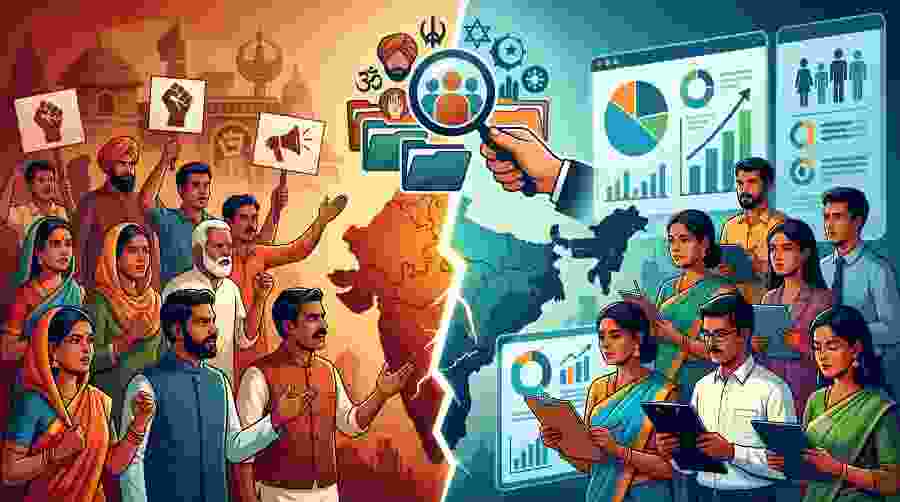
The caste census debate in India has sparked significant public discourse, with strong opinions on both sides. It touches upon social justice, economic planning, and identity politics, making it a contentious issue.
New Delhi, August 2026 — The ongoing discussion regarding a caste census has intensified, with the government yet to take a definitive stance. This initiative aims to gather detailed data on the socio-economic conditions of various caste groups in India.
What Is Happening?
The Indian government is considering conducting a caste census for the first time since 1931. This move has led to a polarized response among political parties, activists, and citizens. While some advocate for it as a means to address historical inequalities, others fear it may deepen social divides.
Why Is This Important for Common Indians?
The outcome of the caste census could significantly impact resource allocation and affirmative action policies. For many, it represents a step towards understanding and rectifying disparities faced by marginalized communities. Conversely, critics argue it might perpetuate caste identities instead of diminishing them.
- Approximately 50% of India’s population belongs to Scheduled Castes and Scheduled Tribes.
- Previous data on caste was last collected during the 1931 census.
- Over 70% of Indians support the idea of a caste census, according to recent surveys.
- The initiative could influence the distribution of government welfare schemes.
What Do Experts Say?
Experts are divided over the implications of a caste census. Proponents believe it could lead to better-targeted social policies, while detractors warn against the potential for increased caste-based animosity. The debate underscores the complexities of identity politics in a diverse nation like India.
What Should You Expect Next?
As discussions unfold, we can expect increased mobilization from various caste groups advocating for their representation. Political parties may begin to align their strategies based on public sentiment regarding the census. Additionally, public opinion will likely shape the government’s decision-making process.
आगे क्या? (What’s Next) The future of the caste census remains uncertain. The government’s decision will not only influence policy-making but could also reshape societal dynamics in India. As the debate continues, monitoring the impact on voters and community relations will be crucial for understanding the broader implications of this initiative.
Leave a Reply