
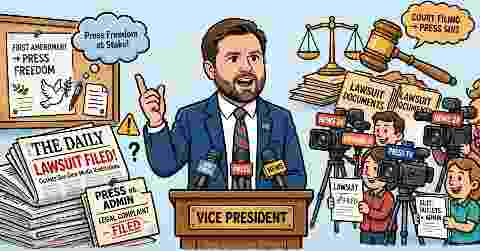
MARYLAND — U.S. Vice President JD Vance has firmly defended the Trump administration’s decision to revoke special White House access for major news organizations—including CNN, MS Now, and Politico—following a lawsuit filed by the outlets. Speaking to reporters, Vance rejected the characterization that the administration is “banning” media outlets, clarifying that the move is a withdrawal of special privileges rather than an infringement on free speech.
Disputing the “Ban” Narrative
Addressing concerns over press freedom, Vance drew a sharp distinction between restricting media access and infringing upon constitutional rights.
- Continued Access: Vance emphasized that these news organizations can still report on the Trump White House, access public briefings, and communicate with administration officials.
- Removal of Special Privileges: “What the president has said is, ‘We’re not going to give you special access inside the White House,'” Vance stated, likening it to basic fairness rather than censorship.
Accusations of Propaganda and Bias
Defending the administration’s rationale, Vance pointed to what he termed overwhelmingly negative media coverage from the affected outlets.
- Skewed Reporting: He claimed that roughly 92% of the stories produced by CNN, MS Now, and Politico regarding the administration are negative, arguing that such coverage fails to reflect public opinion or the broader American public.
- Drawing Historical Parallels: Comparing outlets like Politico to past conservative-leaning publications such as Breitbart, Vance questioned why a Republican administration should be expected to grant special privileges to outlets engaged in what he described as “far-left propaganda” when past administrations faced similar partisan dynamics.
Bottom Line
As legal battles unfold between media heavyweights and the administration, the White House maintains that revoking special workspace access is a proportionate response to biased coverage, while critics and the suing outlets argue it sets a dangerous precedent for press freedom.
Leave a Reply