
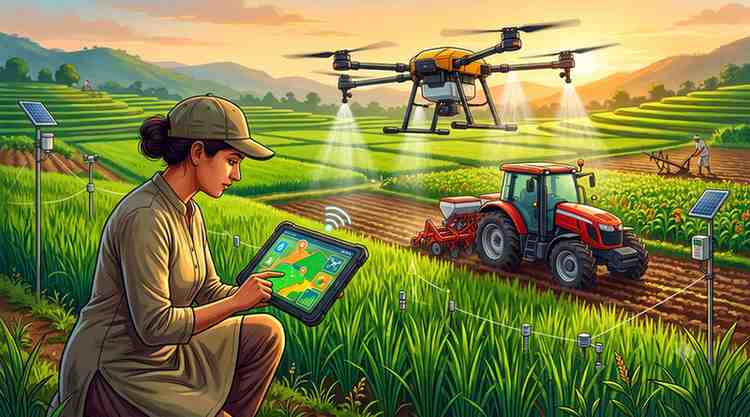
Modern farming techniques are revolutionizing agriculture in India, promising higher yields and sustainability. These innovations could significantly enhance the livelihoods of farmers across the country.
New Delhi, August 2026 — Around 60% of India’s population relies on agriculture, yet the sector faces numerous challenges. Today, modern farming techniques are stepping in to address these issues.
What Is Happening?
Modern farming secrets are being uncovered through innovative techniques and sustainable practices. Techniques such as precision farming, hydroponics, and vertical farming are gaining traction among Indian farmers. These methods not only increase productivity but also reduce the environmental impact.
Why Is This Important for Common Indians?
The shift towards modern farming is crucial for the average Indian, especially farmers. With the promise of higher yields, farmers can expect better incomes, which directly impacts their families and communities. This transformation also plays a role in ensuring food security for the growing population.
What Do Experts Say?
Experts emphasize that modern farming can bridge the gap between traditional methods and global agricultural standards. They highlight that adopting new technologies can make farming more resilient to climate change. Furthermore, educational initiatives are necessary to equip farmers with the skills needed to implement these innovations.
What Should You Expect Next?
As modern farming techniques continue to spread, expect increased government support and investment in agricultural technology. Farmers will likely receive training programs to help them adapt to these changes. Additionally, the rise of agritech startups will provide new tools and resources to enhance farming practices.
- India has over 140 million farmers, many of whom are adopting modern methods.
- Hydroponics can increase crop yield by up to 30% compared to traditional methods.
- Precision farming reduces water usage by 30-50%.
- Vertical farming can produce 10 times more food per square foot than conventional farming.
- The Indian government aims to double farmers’ income by 2022 through various initiatives.
The impact of modern farming techniques will be felt across the economy. For workers, it could mean new job opportunities in agritech. Students may find new fields of study in sustainable agriculture. Investors will see potential in agritech startups, and farmers will benefit from enhanced productivity and income.
आगे क्या? (What’s Next) Modern farming is poised to reshape the agricultural landscape in India. As these techniques become mainstream, we can expect a shift towards more sustainable and profitable farming. The government and private sectors must collaborate to ensure that these innovations reach all corners of the country, making agriculture a viable option for the next generation.
Leave a Reply