
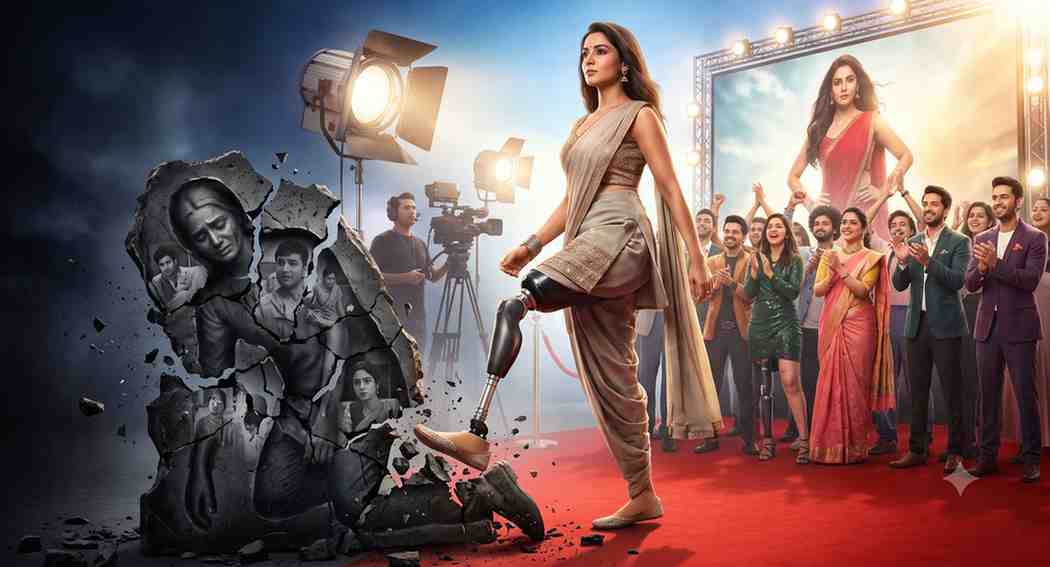
Mumbai, July 2026 — In a bold departure from traditional Bollywood tropes, actress Huma Qureshi is challenging the industry’s long-standing tendency to typecast characters with disabilities. Her latest film, Baby Do I Do, presents a radical shift in representation: a deaf and mute protagonist who isn’t a victim, but a lethal, self-reliant assassin.
Breaking the “Bechara” Stereotype
For decades, mainstream Indian cinema has favored “soft” stories of disability, often depicting characters as helpless figures waiting for a savior. Qureshi’s character, Baby Karmarkar, shatters this mold. As a “silent hit-woman” who hides weapons in her signature red umbrella, the character prioritizes agency and vengeance over helplessness. Qureshi explicitly rejects the bechara (pitiful) narrative, stating, “I don’t need anyone to avenge me; I will avenge myself.”
Beyond the “Box” of Disability
Qureshi’s preparation for the role involved deep engagement with children at special schools, not merely to learn sign language, but to observe the distinct, multifaceted personalities that exist beyond the label of “disability.” She argues that the industry has historically failed to see these individuals as nuanced human beings, choosing instead to pack them into a homogeneous box for emotional convenience. In Baby Do I Do, the character’s disability is a trait, not her entire identity.
A Market Rejecting Templates
The actress believes that the Indian audience’s appetite for content is evolving. “Audiences today are rejecting template content; they want something new,” she says. By stepping into a role that combines intense action with a non-traditional protagonist, Qureshi is testing the boundaries of mainstream cinema, forcing audiences to confront their own biases regarding who can be a “hero” or an “action star.”
The Power of Representation
The film serves as a critique of how society—and by extension, the film industry—perceives those with disabilities. Qureshi emphasizes that the struggle isn’t just about the disability itself, but about the societal perception that treats these individuals as a single, separate group. By moving this character into the mainstream thriller genre, the film aims to normalize diverse representations, proving that high-stakes, action-driven storytelling can be just as impactful when it breaks the mold.
Bottom Line Baby Do I Do is more than just a thriller; it is a declaration that the era of the “helpless protagonist” is ending. Through a character who wields a red umbrella as a weapon of justice, Huma Qureshi is proving that authentic representation is not about patronizing the audience, but about delivering compelling, original stories that acknowledge the complexity of every human life.
Leave a Reply