
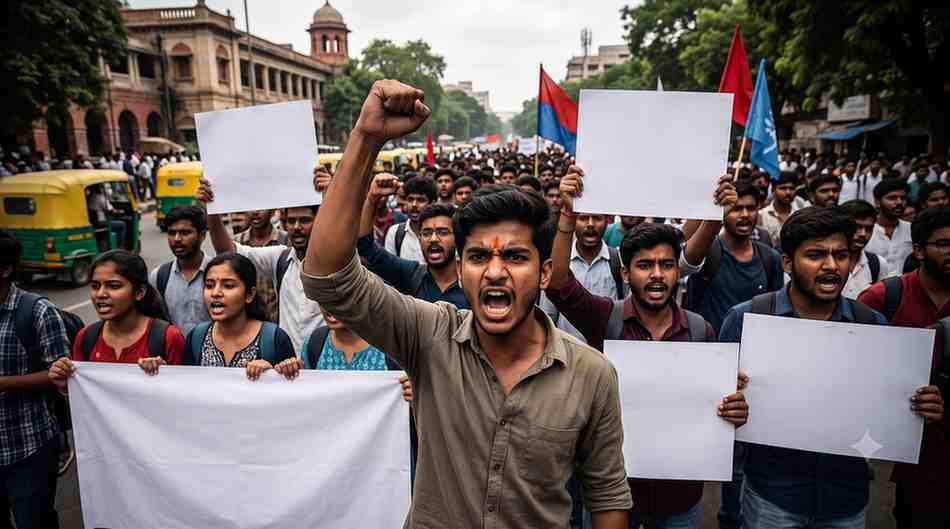
Recent student protests across India are largely driven by concerns over job security and unemployment. This discontent reflects a broader frustration with economic conditions and government policies.
New Delhi, July 2026 — A staggering 50% of Indian graduates are reportedly unemployed, prompting a wave of student protests nationwide.
What Is Happening?
Across major Indian cities, students are taking to the streets to voice their frustrations over job scarcity. Demonstrations have been organized in response to perceived government inaction on employment issues. The protests have galvanized a diverse group of students, uniting them under a common cause.
Why Is This Important for Common Indians?
The rising unemployment rate directly impacts the lives of millions of families. Many young people feel disillusioned as their degrees do not guarantee jobs. This situation creates a ripple effect, affecting the economy and social stability.
What Do Experts Say?
Experts emphasize that these protests highlight systemic issues within the education and job sectors. They argue that the government needs to reassess its policies to better align education with market demands. Failing to do so could lead to increased unrest and economic challenges.
What Should You Expect Next?
As protests continue to escalate, government responses will be crucial. Stakeholders expect calls for reforms in educational curricula and job creation initiatives to gain momentum. The outcome of this unrest could shape India’s economic policies for years to come.
- Current unemployment rates among graduates stand at 50%.
- Over 70% of students express dissatisfaction with government job policies.
- Recent surveys indicate that 60% of young Indians are considering emigration for better opportunities.
- Protests have occurred in over 15 major cities, including Delhi, Mumbai, and Bangalore.
- Experts predict that unless action is taken, unrest may grow in intensity.
The average Indian worker, student, and farmer is directly affected by these protests. With rising unemployment, students face uncertain futures, while families bear the financial burden of prolonged joblessness. Investors may also become cautious, fearing instability in the market.
आगे क्या? (What’s Next) The government is under pressure to address these issues swiftly. Reforms in education and job policies may emerge in the coming months. Observers will be watching closely to see if these protests lead to meaningful change or if they will fizzle out without any impact.
Leave a Reply