
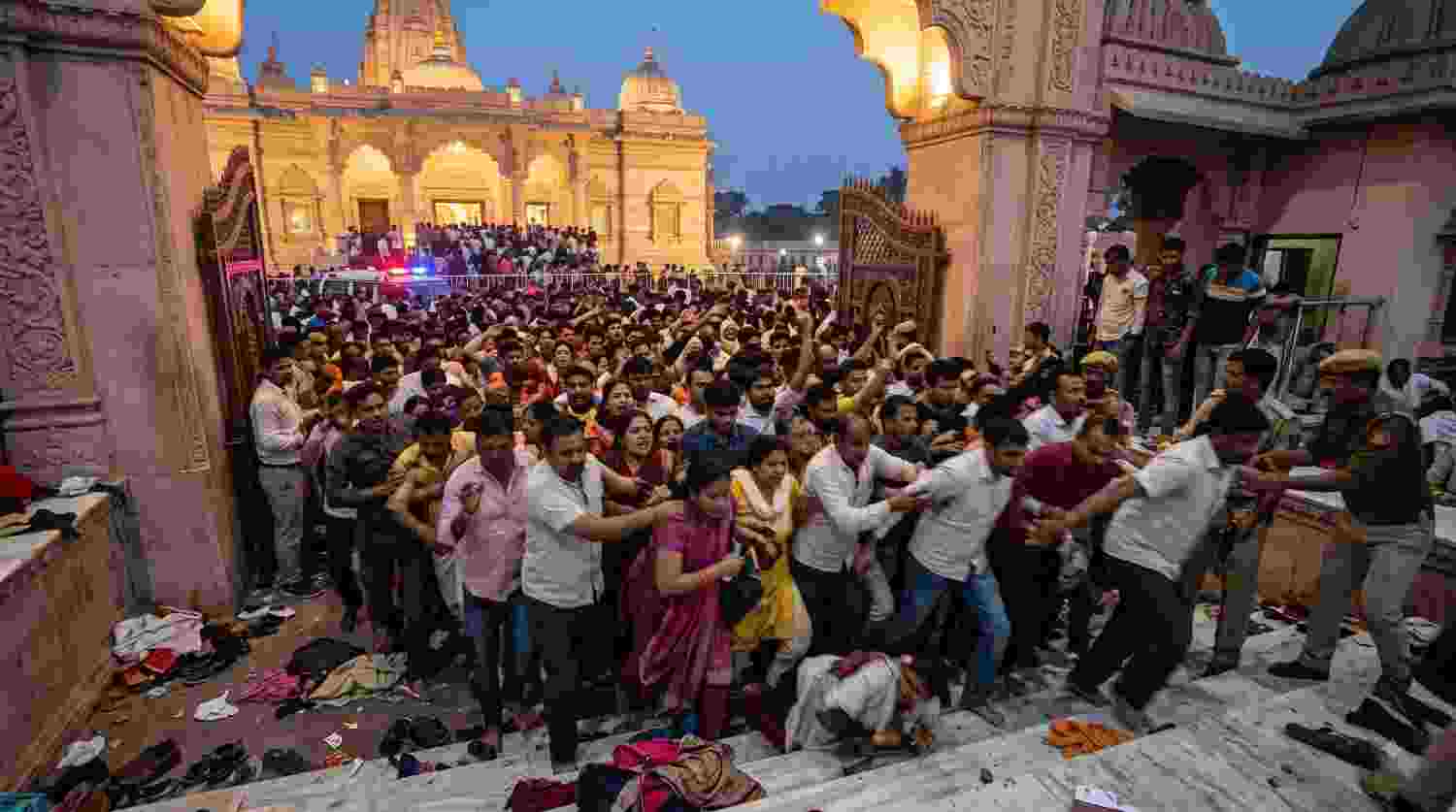
A tragic stampede at Ashok Dham Temple in Lakhisarai, Bihar, has led to the deaths of seven people. This incident highlights serious safety concerns during religious gatherings in India.
New Delhi, August 2026 — A deadly stampede at the Ashok Dham Temple in Lakhisarai, Bihar, has claimed the lives of seven devotees, sparking outrage and concern over crowd management at religious events.
What Is Happening?
The stampede occurred during a significant religious event, drawing large crowds. Witnesses reported chaos as people rushed to participate in the festivities. Authorities are investigating the circumstances that led to this tragic incident.
Why Is This Important for Common Indians?
This incident raises critical questions about public safety at religious gatherings, which are common in India. It serves as a stark reminder of the need for improved crowd management and safety protocols. Many Indians participate in such events, making the issue of safety particularly relevant.
What Do Experts Say?
Experts emphasize the importance of planning and crowd control during large events. They argue that lack of proper infrastructure often leads to tragic outcomes in high-density situations. The need for stringent regulations and training for event organizers is now more pressing than ever.
What Should You Expect Next?
In the aftermath of this tragedy, we can expect heightened scrutiny of safety measures at public events. Authorities may implement stricter regulations to prevent similar incidents. Community leaders are likely to demand accountability from event organizers and government officials.
- Seven people lost their lives in the stampede.
- The incident occurred during a major religious celebration.
- Authorities are currently investigating the crowd management protocols.
- Witnesses described scenes of panic and confusion.
- There are calls for improved safety measures at religious gatherings nationwide.
This unfortunate incident impacts the average Indian significantly. Workers may feel anxious about attending crowded events, students might have concerns for their safety during festivals, and farmers may fear potential disruptions during busy harvest seasons. The ripple effect of such tragedies extends beyond the immediate victims, affecting community morale and trust in safety measures.
आगे क्या? As the investigation unfolds, we can anticipate a push for better safety regulations at religious events across India. This could lead to reforms in how such gatherings are organized, possibly requiring permits and safety plans. Community awareness and engagement will be crucial in ensuring that such tragedies do not recur in the future.
Leave a Reply