
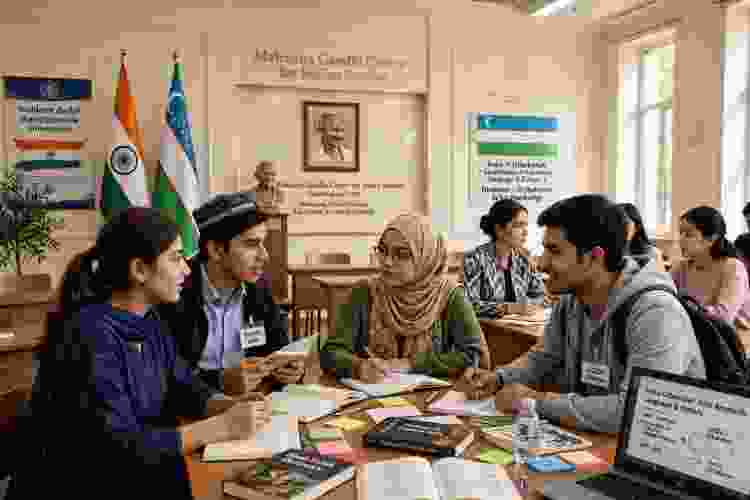
Prime Minister Modi’s recent interaction with students in Tashkent aims to foster international ties and inspire the youth. This event highlights India’s commitment to strengthening educational exchanges globally.
New Delhi, August 2026 — Prime Minister Modi engaged with students at the Gandhi Centre in Tashkent, emphasizing the importance of education in shaping future leaders. This event marks a significant step in promoting cultural and educational diplomacy.
What Is Happening?
During his visit to Uzbekistan, PM Modi addressed a gathering of students, stressing the value of education in a globalized world. He shared insights on how India and Uzbekistan can collaborate in various sectors, particularly education and technology. This interaction aims to inspire students to think beyond borders and embrace diverse cultures.
Why Is This Important for Common Indians?
The interaction underscores India’s focus on education as a tool for national development. It highlights opportunities for Indian students to gain international exposure, which can enhance their career prospects. By fostering educational ties, India can attract foreign investments in its educational institutions, benefiting students across the country.
What Do Experts Say?
Experts believe that PM Modi’s engagement with international students is crucial for soft power diplomacy. Dr. Anjali Kumar, an education policy analyst, stated that such initiatives can lead to increased collaboration between Indian and foreign universities. This can boost India’s global standing and create avenues for enhanced knowledge sharing.
What Should You Expect Next?
Following this interaction, we can expect a surge in student exchange programs between India and Uzbekistan. Initiatives aimed at enhancing technology education are likely to be introduced. Additionally, collaborations with Indian universities may increase, leading to enriched academic experiences for students.
- PM Modi emphasized the need for educational exchanges and technological cooperation.
- The event attracted students from various backgrounds, showcasing cultural diversity.
- Discussions included potential partnerships between Indian and Uzbek universities.
- Increased investment in education from both countries is anticipated.
- Student engagement in international forums is expected to rise.
For the average Indian, this initiative may open doors to international scholarships and internships, particularly for students and professionals in fields like technology and business. Workers in the education sector can also benefit from increased funding and collaboration opportunities. Farmers may see indirect benefits through enhanced agricultural education programs.
आगे क्या? (What’s Next) In the coming months, we can expect announcements regarding new educational partnerships and exchange programs. This could lead to more Indian students studying abroad and foreign students coming to India, enriching the educational landscape. The long-term vision is to position India as a global education hub, which would significantly impact the economy and cultural exchange.
Leave a Reply