
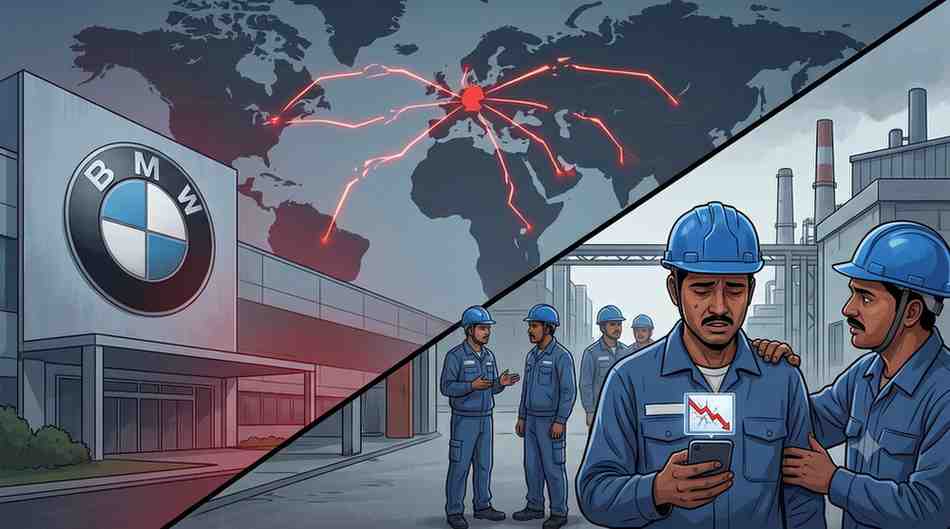
BMW’s decision to cut 8,000 jobs despite strong sales signals a shift in the automotive industry. This move raises concerns about job security and economic stability worldwide.
New Delhi, July 2026 — BMW has announced plans to reduce its workforce by 8,000 positions, even as the company enjoys robust sales figures. This decision has sent shockwaves through the global automotive sector, prompting discussions about economic trends and employment stability.
What Is Happening?
BMW is implementing significant layoffs, citing a need to streamline operations amid rising production costs and evolving market demands. The company has attributed this decision to increased competition and the shift toward electric vehicles. This has raised questions about the future of jobs in traditional manufacturing sectors.
Why Is This Important for Common Indians?
The layoffs at BMW could have ripple effects that reach Indian shores, particularly in sectors reliant on automobile manufacturing and exports. With many Indian companies collaborating with global brands, job security could become a pressing issue. For the average worker, this may mean heightened uncertainty in an already volatile job market.
What Do Experts Say?
Industry experts are divided on the implications of BMW’s workforce reduction. Some believe it reflects a broader trend of automation and technological advancements that may displace workers. Others warn that this could lead to a loss of consumer confidence, affecting spending patterns in emerging markets like India.
What Should You Expect Next?
Following BMW’s announcement, other automotive manufacturers may follow suit, leading to potential job cuts across the industry. This could exacerbate existing economic challenges for many countries, including India. Stakeholders should monitor the situation closely, as it may influence investment decisions and employment policies.
- BMW’s layoffs account for approximately 10% of its workforce.
- The company reported a 15% increase in sales last quarter.
- Electric vehicle production costs have surged by 25% over the past year.
- Experts predict a 20% reduction in automotive jobs globally by 2028.
- Indian auto exports could decline by 15% if trends continue.
The average Indian worker, student, investor, and farmer could all feel the impact of these layoffs. Job seekers may find it harder to secure positions in related industries, while investors may face volatility in the stock market. Students looking to enter the automotive field may need to reconsider their career paths, and farmers in related supply chains might experience decreased demand.
आगे क्या? (What’s Next) — As BMW and other manufacturers navigate this complex landscape, it is crucial to recognize the potential for a shift in employment dynamics. Companies may invest more in automation, which could lead to a transformation in the job market. Stakeholders must adapt and prepare for this evolving reality to mitigate risks and seize opportunities in the future.
Leave a Reply