
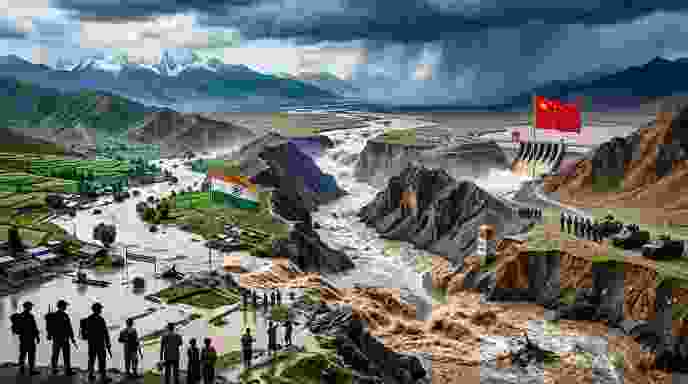
Floods in Tibet’s Gyirong region have caused significant destruction, raising concerns about border stability with Nepal and India. This natural disaster could impact regional relations and trade.
New Delhi, September 2026 — Severe floods in Tibet’s Gyirong region have resulted in extensive damage, prompting concerns over regional stability and border security with neighboring countries.
What Is Happening?
Recent floods in Tibet have wreaked havoc in Gyirong, leading to widespread destruction. The Nepal-China border area has been particularly affected, with reports of infrastructure damage and displacement of local populations. As a result, the situation has raised alarms for India, given its proximity and existing border issues with China.
Why Is This Important for Common Indians?
The impact of these floods extends beyond Tibet and may influence India’s economic and security landscape. Disruptions in the border areas can affect trade routes, leading to potential price hikes for goods. Furthermore, any instability in the region could affect Indian investments and the livelihood of workers dependent on cross-border trade.
What Do Experts Say?
Experts highlight that natural disasters like these can exacerbate tensions between nations, especially in sensitive border regions. They warn that China’s response to the situation may involve increased military presence, affecting regional peace. Analysts stress the importance of diplomatic channels to address potential fallout and maintain stability.
What Should You Expect Next?
In the wake of these floods, expect increased scrutiny on India-China relations and more discussions on border security. With the monsoon season bringing further risks, both countries may need to collaborate on disaster management. Watch for potential changes in trade policies as a result of the disrupted routes.
- Over 1,000 homes have been reported damaged in Gyirong.
- Infrastructure losses are estimated in millions, affecting local economies.
- Local authorities have begun evacuations, impacting around 5,000 residents.
- The floods have disrupted key transportation routes vital for trade.
- India has increased its military readiness in border regions as a precaution.
The average Indian worker and farmer may feel the ripple effects of this disaster through potential increases in commodity prices and supply chain disruptions. Students may face delays in educational exchanges or travel due to heightened border security. Investors could see shifts in market dynamics, particularly in sectors reliant on imports from China.
आगे क्या? (What’s Next) The floods in Tibet serve as a stark reminder of the interconnectedness of regional stability and economic health. As both China and Nepal face the aftermath, India must stay vigilant in diplomatic engagements. Expect discussions on enhanced border cooperation and disaster management strategies to prevent future crises from escalating into larger conflicts.
Leave a Reply