
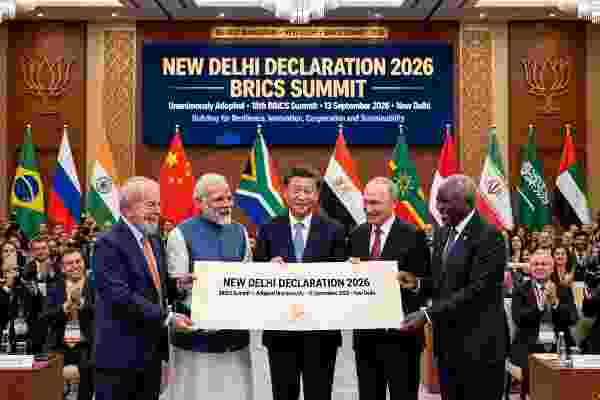
New Delhi, September 2026 — In a significant diplomatic milestone, Prime Minister Narendra Modi successfully concluded the BRICS Session on Inclusive Global Governance and Strengthening Multilateralism, announcing the unanimous adoption of the BRICS New Delhi Declaration 2026. The summit underscored the bloc’s growing influence and its collective push for equitable global reforms.
The New Delhi Declaration 2026
Opening his concluding remarks, PM Modi presented the draft of the BRICS New Delhi Declaration 2026, which encapsulates the core essence of the leaders’ discussions on major global and regional issues. With no objections raised by any member state, the declaration was adopted unanimously. It sets a clear, strategic roadmap for reinforcing BRICS cooperation and outlines shared priorities for the future.
Commemorating Two Decades of BRICS
This year marks exactly two decades since the inception of the BRICS journey. To commemorate this monumental milestone, the Government of India issued two special postage stamps. In a ceremonial moment during the session, PM Modi formally released the stamps, inviting all participating leaders to unveil them at their respective tables, symbolizing the bloc’s enduring partnership and shared history.
A Call to Overhaul Outdated Institutions
The overarching theme of the session was the urgent need to reform global governance structures. PM Modi delivered a sharp critique of the current international order, explicitly stating that a rapidly changing world can no longer be managed by outdated institutions. He identified three critical pillars where reform is absolutely essential: Representation, Responsiveness, and Rule-making. The consensus among the leaders highlighted that existing global bodies must evolve to reflect modern geopolitical realities.
Elevating the Voice of the Global South
A major focal point of the Prime Minister’s address was the empowerment of developing nations. He strongly advocated that the Global South must have an equal and decisive role in shaping future technologies and formulating international rules. This push aligns with India’s consistent foreign policy objective to position itself as a central voice for the developing world, ensuring they are no longer sidelined in global decision-making processes.
Bottom Line
As the session wrapped up, PM Modi emphasized that the gap between making decisions and achieving actual outcomes must be bridged through genuine partnership and collective action. The New Delhi Declaration provides the vision, but the real responsibility now lies in translating these high-level commitments into concrete, tangible results on the global stage.
Leave a Reply