
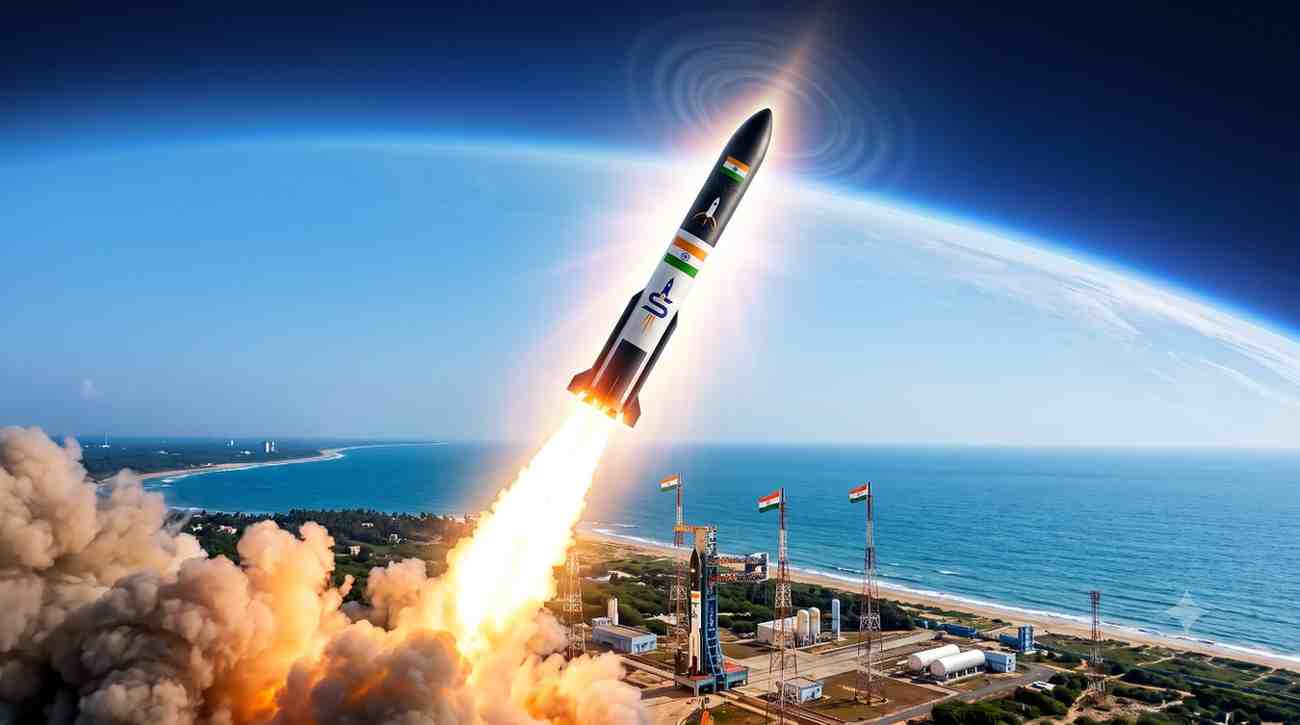
India’s first private orbit-class rocket, Vikram-1, marks a significant milestone in the country’s space journey. This launch is not just a technological achievement; it represents a new era of private sector participation in space exploration.
New Delhi, August 2026 — The successful launch of Vikram-1 has positioned India as a formidable player in the global space market, showcasing the growing capabilities of its private sector.
What Is Happening?
India has successfully launched its first privately developed orbit-class rocket, Vikram-1. This rocket, designed by a startup, represents a breakthrough in the country’s space technology landscape. The launch opens doors for more private companies to participate in space missions.
Why Is This Important for Common Indians?
The Vikram-1 launch is vital because it enhances India’s self-reliance in space technology. With private companies now taking part, costs for satellite launches may decrease, benefiting various sectors including telecommunications and agriculture. This development could also lead to increased job opportunities in the burgeoning space industry.
What Do Experts Say?
Experts are optimistic about the implications of Vikram-1 for India’s space ambitions. They believe that this launch demonstrates the potential of Indian startups to innovate and compete globally. Additionally, it could pave the way for more collaborative projects between the public and private sectors.
What Should You Expect Next?
In the wake of Vikram-1, we can anticipate a surge in private space initiatives. More startups are likely to emerge, focusing on satellite technology and launch services. This could also attract foreign investments, further boosting India’s position in the global space arena.
- Vikram-1 is the first rocket developed by an Indian private company.
- The rocket can carry payloads of up to 300 kilograms.
- This launch is a result of the Indian government’s push for a liberalized space sector.
- The global space market is projected to reach $1 trillion by 2040.
- India aims to double its satellite launches in the next five years.
The impact of the Vikram-1 launch resonates deeply with everyday Indians. For students, it offers new learning opportunities in science and technology. Farmers may benefit from advanced satellite services that can improve crop yields. Investors could see promising returns as the private space sector expands.
आगे क्या? (What’s Next) The future looks bright for India’s space industry post-Vikram-1. With increased private participation, we may witness rapid advancements in satellite technology and space exploration missions. This could not only enhance India’s technological landscape but also position the country as a key player in the global space economy.
Leave a Reply