
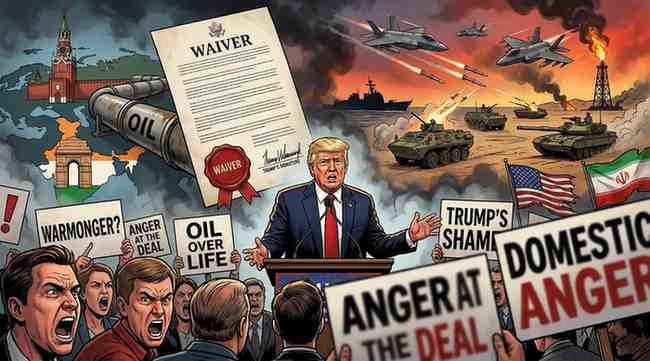
WASHINGTON, D.C., March 2026 — A fierce political battle has erupted in Washington as congressional Democrats demand the immediate reversal of a sanctions waiver allowing India to continue purchasing Russian oil. The controversy comes as the ongoing war with Iran chokes global energy arteries, forcing the Trump administration to choose between domestic price stability and a unified front against its adversaries.
A “Dangerous and Indefensible” Carve-Out
The Treasury Department recently issued a temporary 30-day sanctions “carve-out” for Indian refiners. The goal was to stabilize global markets as the U.S.-Israeli assault on Tehran severely disrupted traffic in the Strait of Hormuz—a route responsible for 20% of the world’s oil and gas.
However, the move has triggered a “fresh political battle”. In a letter to Treasury Secretary Scott Besson, Congressman Sam Licardo and Senator Ruben Gallego branded the waiver “dangerous, self-defeating, and indefensible,” arguing it provides a “material benefit to an enemy” at a time when global tensions are at a breaking point.
The Price of War: Gas Spikes and Midterm Anxiety
The administration’s primary motivation appears to be the American consumer. As supply tightened, the impact on U.S. markets was immediate:
- Crude Surges: U.S. crude crossed $108 per barrel, while global benchmark Brent reached nearly $110.
- Gasoline Costs: Domestic prices hit an average of $3.44 per gallon, according to GasBuddy.
- Voter Dissatisfaction: With midterm elections just eight months away, rising fuel prices are a major political liability for President Trump, whose handling of the economy is facing growing scrutiny.
Intelligence Reports and High Stakes
The political tone shifted further following reports that Russia may be providing intelligence to Iran to help target U.S. ships and military bases. Lawmakers argue that lifting sanctions—even briefly—rewards Moscow while it actively assists in efforts to harm American troops. They have accused the administration of “poor contingency planning,” suggesting that alternative energy sources should have been secured for allies instead of relying on Russian exports.
India: The Critical Energy Hub
For the U.S., India is more than just a buyer; it is a “critical stabilizing force” in the global energy market. As the world’s third-largest oil importer, India relies on foreign crude for over 85% of its needs.
U.S. Energy Secretary Chris Wright defended the waiver as a “pragmatic step,” claiming it prevents Russian oil from being redirected entirely to China. By allowing India to remain a major refining hub, the U.S. hopes to ease short-term price shocks until military objectives in Iran are finalized.
Bottom Line
The 30-day waiver was designed to buy time, but it has instead purchased a domestic crisis. Washington is now caught in a pincer movement: prioritize lower gas prices for the American voter or uphold the moral and strategic integrity of the sanctions regime against the Moscow-Tehran axis.
Leave a Reply