
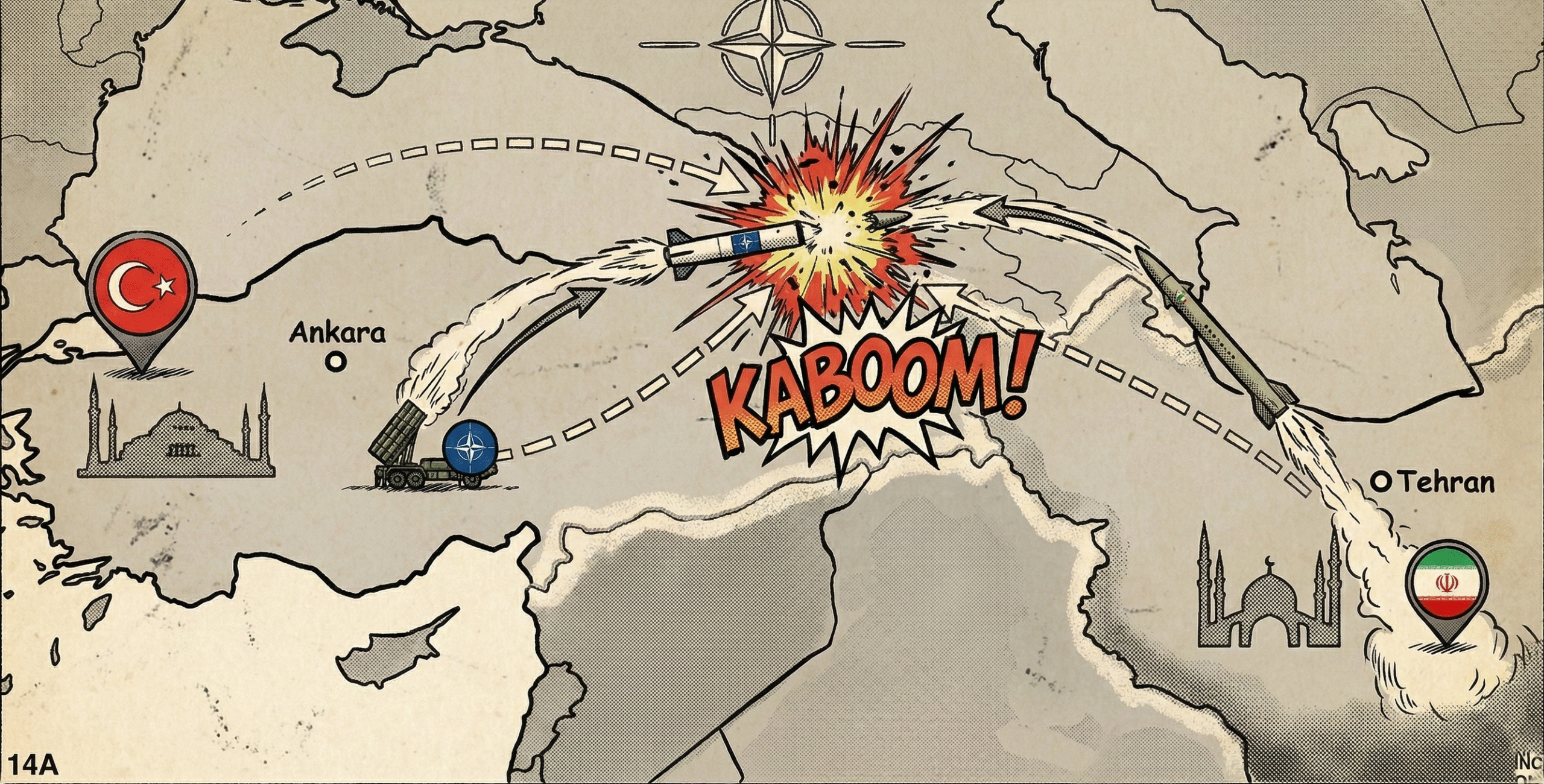
ANKARA, March 2026 — The ongoing conflict in the Middle East reached a perilous new milestone today as a ballistic missile launched by Iran was intercepted by NATO’s air defense systems just before entering Turkish airspace. The incident marks the first direct threat to NATO territory during the current escalation, raising fears of a “World War III” scenario as the conflict spills out of the Middle East.
The Interception Over the Mediterranean
Late last night, NATO’s early warning radar systems detected a ballistic missile launch from Iran. The missile’s trajectory tracked through Iraq and Syria, heading directly toward Turkey. NATO’s multi-layered defense network—including Patriot PAC-3 and Aegis Ballistic Missile Defense systems—immediately activated.
The missile was successfully neutralized over the Eastern Mediterranean region. While there were no direct casualties, debris from the destroyed missile fell near the Incirlik Air Base in southern Turkey. Turkish authorities have characterized the launch as a “serious security threat” to the nation.
Turkey: The Strategic Choke Point
The choice of target is strategically significant. Turkey sits at the crossroads of Europe, the Middle East, and the Mediterranean. More importantly, it controls two critical maritime choke points: the Bosporus Strait and the Dardanelles Strait. These straits are vital for global naval movement and Russia’s access to the oceans.
By targeting Turkey, Iran is directly challenging a nation that hosts multiple NATO installations and, according to reports, U.S. nuclear weapons under a nuclear-sharing arrangement.
The Article 5 Dilemma
The incident has triggered intense debate over Article 5 of the NATO treaty, which states that an attack on one member is an attack on all. Because the missile was neutralized before hitting Turkish soil, Article 5 was not automatically triggered. However, analysts warn that had the missile made impact, the U.S., UK, France, and Germany would have been legally pressured to retaliate directly against Tehran.
Calculated Warning or Failed Strike?
There are several theories regarding Iran’s intent behind the launch:
- High-Value Targets: A deliberate attempt to hit NATO’s radar and missile defense facilities in Turkey.
- The Cyprus Connection: A potential follow-up to the strike three days ago against the British Royal Air Force base in Akrotiri, Cyprus.
- Strategic Signaling: A “warning shot” to NATO to stay out of the regional war, demonstrating that Iran possesses the long-range missile capability to hit European soil.
Bottom Line
The Middle East war is no longer contained within regional borders. With the Strait of Hormuz blocked and global energy prices skyrocketing, the direct threat to NATO territory signals a dangerous expansion of the battlefield. While NATO Chief Mark Rutte has stated the alliance has “no plans” to join the war against Tehran, the narrow margin of today’s interception suggests that the world is just one successful strike away from a global military mobilization.
Leave a Reply