
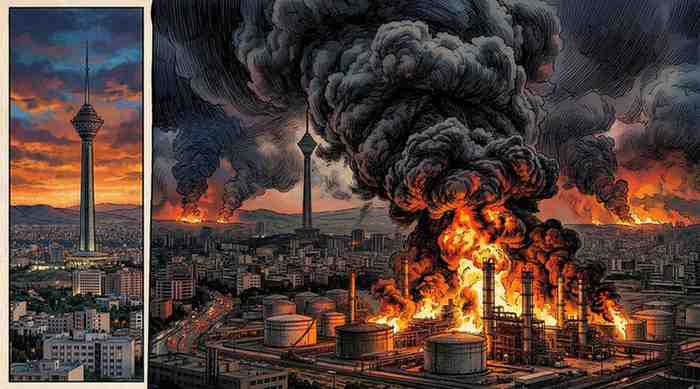
Tehran, March 2026 — The Iranian capital, Tehran, has been transformed into a scene of apocalyptic destruction following a massive wave of Israeli air strikes targeting the nation’s core energy infrastructure. Residents describe “hellish” conditions as giant fireballs and thick plumes of toxic black smoke have completely blocked out the sun in several parts of the city.
A Strike on the Energy Heart
The coordinated strikes targeted multiple high-value locations in Tehran and the neighboring city of Karaj. Specifically, the Israeli Air Force hit the Saharan Oil Depot, Tehran’s most critical fuel storage facility, which supplies the capital with its daily requirement of petrol and diesel.
When missiles hit these massive fuel tanks, they triggered a violent chain reaction. Witnesses reported seeing flames leaping hundreds of feet into the air, creating a “fire storm” that consumed everything in its immediate vicinity within seconds.
Environmental and Human Toll
The impact of the strikes extends far beyond physical damage. The burning of vast quantities of petroleum products has released a cocktail of toxic gases—including sulfur dioxide and nitrogen oxide—into the atmosphere.
- Darkness at Noon: The city was plunged into mid-day darkness by a dense cloud of soot, with residents describing the scene as “apocalyptic”.
- Toxic Rain: Authorities have warned of potential “acidic rain” and severe respiratory issues for the population of over 10 million.
- Casualties: Initial reports confirm at least six dead and over 20 injured, primarily depot workers and tanker drivers.
Strategic and Psychological Warfare
By targeting oil infrastructure, Israel aims to “cripple” the Iranian economy and disrupt the military logistics of the IRGC, which relies on these depots for its missile systems and transport. The psychological impact on the capital is profound; with birds disappearing from the sky and internet shutdowns continuing, a sense of fear has gripped the population.
The Spiral of Retaliation
Iran has wasted no time in striking back. In a direct response, Iranian forces reportedly attacked the Haifa refinery in Israel, causing massive fires. Furthermore, a stray projectile from the conflict hit a residential area in Saudi Arabia (Al-Kharj), resulting in the deaths of two expatriates—one Indian and one Bangladeshi.
Bottom Line
As Tehran burns and the region braces for further escalation, the political landscape in Iran is also shifting. Reports suggest that an 88-member expert panel has already selected the next Supreme Leader—likely Mojtaba Khamenei, son of Ayatollah Khamenei—though an official announcement is pending amid threats from U.S. leadership. With Iran claiming to have a “six-month stockpile” of weapons ready for a long-drawn war, there is no “end game” in sight for this hellish spiral of violence.
Leave a Reply