
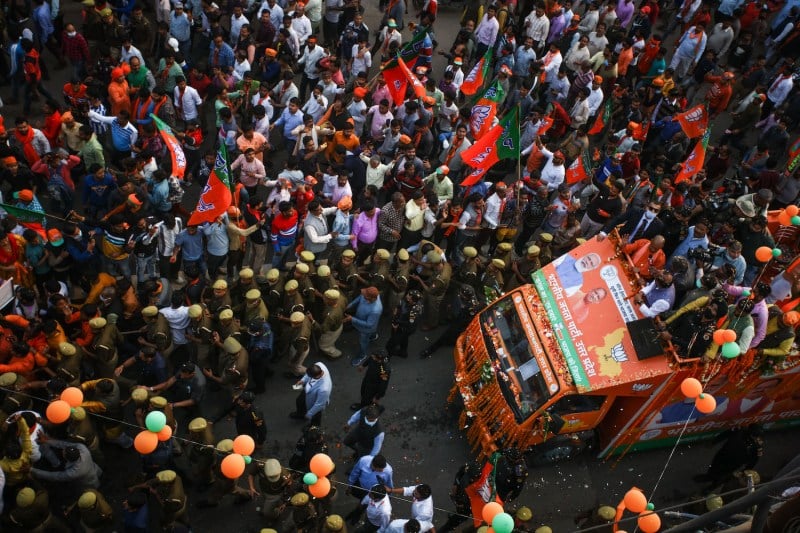
A Complex Political Fabric
Uttar Pradesh (UP), with its immense diversity of caste, religion, gender, and socio-economic backgrounds, represents the challenges and opportunities of inclusive governance in India. With a population exceeding 200 million, the state’s political landscape reflects deep-rooted social hierarchies and identity-driven politics. Despite decades of electoral evolution, the question persists: Is UP’s political system becoming more inclusive, or do barriers remain entrenched?
Key Metrics
- Caste Composition:
- Dalits: 21%
- Other Backward Classes (OBCs): Over 40%
- Upper Castes: Approximately 20% (Census 2011).
- Religious Diversity:
- Hindus: 79.73%
- Muslims: 19.26%
- Others: 1.01% (Census 2011).
- Gender Representation:
- Women hold less than 12% of seats in the UP Legislative Assembly (Election Commission of India, 2022).
- Youth Population: Approximately 32% of UP’s population is aged 15–34 (Census 2011).
Inclusivity in Political Representation
1. Caste Dynamics
Caste-based politics dominate UP’s electoral strategies, often leading to both representation and division.
- Progress:
- Dalit representation, championed by the Bahujan Samaj Party (BSP) under Mayawati, has brought significant political visibility to marginalized communities.
- The rise of OBC leaders, like Akhilesh Yadav of the Samajwadi Party (SP), has furthered representation in governance.
- Challenges:
- Upper castes continue to hold disproportionate power in leadership roles, often overshadowing Dalit and OBC voices.
2. Religious Inclusion
Religious diversity remains a sensitive yet critical factor in UP politics.
- Progress:
- Parties like the SP and Congress have actively sought the support of minority communities, particularly Muslims.
- Challenges:
- Muslims, despite comprising nearly 20% of the population, remain underrepresented in political decision-making and leadership roles.
3. Women in Politics
Gender inclusivity remains a significant hurdle, with women often relegated to symbolic roles.
- Progress:
- Schemes like Mission Shakti aim to empower women economically and socially.
- Challenges:
- The lack of female political leaders and candidates highlights persistent gender biases within party structures.
Key Barriers to Inclusivity
1. Identity Politics
While identity-based politics have brought representation, they often reinforce divisions and limit broader socio-economic discourse.
2. Lack of Grassroots Leadership
Political parties frequently rely on established dynasties or caste leaders, leaving little room for grassroots leaders to rise.
3. Regional Disparities
Regions like Bundelkhand and Purvanchal, with higher concentrations of marginalized communities, receive less attention compared to urban and industrialized areas like Noida and Lucknow.
4. Electoral Tokenism
Policies and programs are often tailored to appease specific groups during elections but lack sustained follow-through.
Steps Toward Greater Inclusivity
1. Empower Grassroots Leadership
Encouraging first-generation leaders from marginalized communities can democratize political representation.
2. Focus on Socio-Economic Development
Parties must prioritize education, healthcare, and employment over identity-based appeals to address systemic inequities.
3. Gender Parity in Politics
Introducing quotas or incentives for female candidates can bridge the gender gap in political representation.
4. Inclusive Policy Design
Policies should be tailored to benefit all sections of society, especially those historically excluded from governance.
5. Strengthen Local Governance
Empowering panchayats and urban local bodies with resources and autonomy can ensure localized and inclusive development.
Conclusion: A Work in Progress
Uttar Pradesh’s political landscape is gradually inching toward inclusivity, but significant hurdles remain. While marginalized communities, minorities, and women have gained visibility, systemic inequities and tokenistic approaches hinder true progress.
To create a genuinely inclusive political system, UP must embrace policies that empower diverse voices and foster collaboration across communities. Inclusivity is not just a challenge—it is an opportunity to build a stronger, more representative democracy. Only then can the state’s diversity be harnessed as its greatest strength.
Leave a Reply