
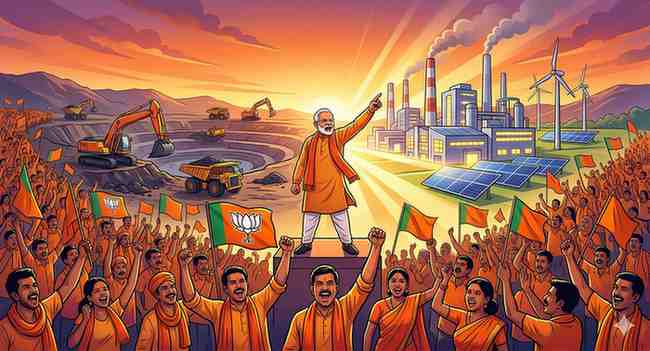
The BJP has intensified its campaign in West Bengal’s industrial heartland, with top leadership promising economic revival and job creation in the historically significant coal mining region. The party is targeting disenchanted industrial workers and youth unemployment as key electoral battlegrounds ahead of crucial state polls.
New Delhi, April 2026 — The ruling BJP has launched an aggressive outreach in West Bengal’s Asansol-Durgapur industrial corridor, signaling a strategic pivot to capture the state’s blue-collar vote bank that has traditionally leaned toward regional parties.
What Is Happening?
Senior BJP leadership conducted a major public rally in Asansol, one of India’s oldest coal mining and steel production hubs. The event drew thousands of attendees from surrounding industrial townships and mining communities. Party strategists view this region as critical for expanding their footprint beyond Bengal’s rural constituencies.
Why Is This Important for Common Indians?
Asansol represents India’s broader industrial decline story — once-thriving factories now struggling with outdated infrastructure and job losses. The promises made here will likely set the template for BJP’s national pitch to industrial workers in the 2027 general elections. For lakhs of families dependent on coal, steel, and manufacturing, these political commitments carry real economic stakes.
What Do Experts Say?
Political analysts suggest the BJP is attempting to replicate its successful Gujarat industrial model in eastern India. Economic observers note that reviving Asansol requires massive infrastructure investment, not just electoral promises. Independent commentators remain skeptical whether any party can reverse decades of industrial neglect within a single term.
- Asansol-Durgapur belt employs over 3 lakh workers in coal, steel, and allied industries
- West Bengal’s industrial growth rate has lagged behind the national average for 15 consecutive years
- Youth unemployment in the region exceeds 25%, significantly higher than state average
- Coal India subsidiaries in the area have seen 40% workforce reduction since 2010
- The constituency has changed political hands four times in the last two decades
How Does This Affect You?
If you’re a worker in India’s manufacturing belt, these political battles determine your job security and wage growth. Students from industrial families face uncertain futures as traditional employment avenues shrink. Small business owners and traders in these regions depend heavily on industrial prosperity — when factories slow down, local markets suffer directly.
आगे क्या? (What’s Next)
The coming weeks will reveal whether this industrial outreach translates into concrete policy announcements or remains campaign rhetoric. Opposition parties, particularly the TMC, are expected to counter with their own industrial revival narratives. For West Bengal’s working class, the real test lies not in rally attendance figures but in actual investment flows and factory reopenings — outcomes that typically take years to materialise regardless of who wins elections.
Leave a Reply