
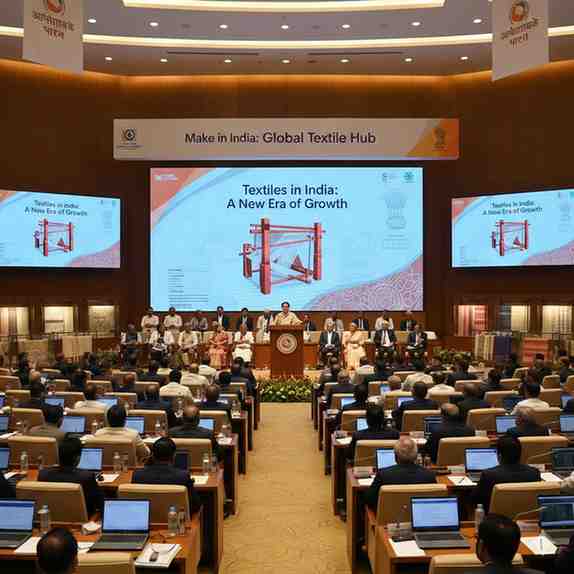
NEW DELHI, February 2026 — The Union Budget 2026–27 has set the stage for a dramatic transformation of India’s textile landscape. Moving beyond traditional roots, the government has unveiled a high-tech blueprint to pivot from local craftsmanship to global dominance through a series of aggressive, integrated initiatives.
Mahatma Gandhi Gram Swaraj: Elevating the Grassroots
At the heart of the budget is a renewed commitment to India’s heritage. The newly launched Mahatma Gandhi Gram Swaraj initiative aims to breathe new life into the Khadi, handloom, and handicraft sectors. Rather than viewing these as legacy industries, the government is positioning them as the bedrock of rural self-reliance, providing artisans with the infrastructure needed to compete in a modern economy.
Samarth 2.0: Reskilling for the Future
Recognizing that a global industry requires a global skill set, the government introduced Samarth 2.0. This program is designed to overhaul the existing textile skilling ecosystem, moving away from outdated methods to focus on the emerging technical demands of modern manufacturing. The goal is simple: prepare the Indian workforce to handle the “new age” of high-speed, high-precision textile production.
The National Fiber Scheme: Strategic Self-Reliance
In a strategic strike against import dependency, the National Fiber Scheme was announced to create a balanced and resilient raw material base. By promoting a mix of:
- Natural Fibers: Supporting traditional cotton and silk farmers.
- Man-Made Fibers: Boosting synthetic production.
- New-Age Fibers: Investing in sustainable, high-performance materials.
This scheme ensures that Indian manufacturers have a steady, domestic supply of the building blocks of fashion.
Expansion in “Challenge Mode”
To scale up production, the budget introduces Mega Textile Parks to be established in “challenge mode.” This competitive framework encourages states to provide the best possible infrastructure to attract massive investment. Coupled with the Textile Expansion and Employment Scheme, these clusters are expected to become productivity powerhouses, modernizing traditional hubs while generating millions of local jobs.
Global Ambition via TEXT-ECO
The final piece of the puzzle is the TEXT-ECO Initiative. This program is designed to position India as a leader in sustainable and eco-friendly apparel. By aligning with global environmental standards, India aims to capture the premium international market, ensuring that the “Made in India” tag is synonymous with both quality and sustainability.
Bottom Line
The Union Budget 2026–27 is a clear signal that India is no longer content being just a supplier of raw materials. By merging the tradition of the spinning wheel with the efficiency of mega-parks and AI-driven skills, the government is stitching together a future where Indian textiles define the global wardrobe.
Leave a Reply