
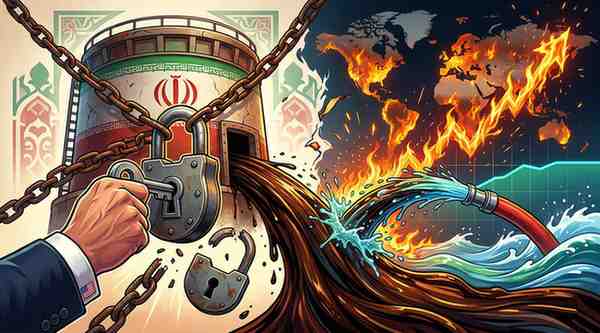
WASHINGTON D.C., March 23, 2026 — In a tactical shift aimed at stabilizing a volatile global energy market, the United States has authorized the limited sale of Iranian oil. While primary sanctions against Tehran remain firmly in place, US Treasury Secretary Scott Bessent announced a narrowly tailored, short-term license designed to inject immediate supply into a parched global system.
The “Limbo” Oil: 140 Million Barrels Unlocked
The new authorization targets a specific bottleneck: millions of barrels of crude and petrochemical cargo currently stuck at sea. Under these strict guidelines, only shipments loaded onto vessels before March 20th are eligible for sale, ensuring that no “fresh” exports are incentivized.
Industry experts estimate that approximately 140 million barrels—much of it previously stockpiled by China at discounted rates—could now physically enter global ports. This “floating limbo” can now be offloaded and sold until a firm deadline of April 19th, providing a critical but temporary window of relief.
Combatting the $112 Surge
The timing of Washington’s intervention follows one of the sharpest energy shocks in recent history. Driven by the intensifying conflict in the Middle East and threats to the Strait of Hormuz—the artery for 20% of the world’s daily oil—prices have surged by over 50% in just weeks.
Market Impact:
- Price Peak: Brent crude recently breached $112 a barrel, its highest level since mid-2022.
- Inflationary Pressure: The spike has triggered immediate concerns regarding global transport costs and rising inflation.
- Stabilization Goal: This move is part of a broader U.S. effort to bring a total of 440 million additional barrels into the global market through various emergency measures.
Sanctions Intact, De-escalation Hinted
Despite this release, the U.S. Treasury was careful to note that core sanctions on Iranian exports remain unchanged. This is a “supply injection” rather than a policy reversal, mirroring past maneuvers used to release Russian oil stuck at sea during previous sanction cycles.
However, oil prices showed signs of a slight cooling after separate indications that the U.S. might consider scaling down certain military operations, offering a rare hint of potential de-escalation in the Gulf.
Bottom Line
The era of “total blockade” has temporarily yielded to the reality of global energy inflation. By unlocking stranded Iranian oil, Washington is attempting to lower the temperature of the global economy without removing the noose from Tehran’s leadership. With the April 19th deadline looming, the masks are off: the world needs the oil, even if it rejects the regime that produced it.
Leave a Reply