
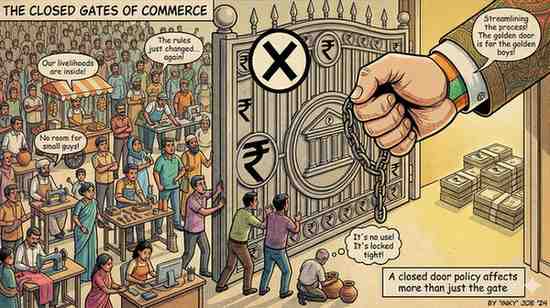
The Reserve Bank of India’s revised lending norms for micro, small, and medium enterprises are set to tighten credit access for millions of small business owners across India. Banks will now require stricter collateral and credit score thresholds, potentially leaving 40% of existing MSME borrowers ineligible for fresh loans.
New Delhi, April 2026 — India’s 63 million small businesses are staring at a funding crisis as the Reserve Bank of India’s updated prudential norms for MSME lending come into effect this quarter, fundamentally reshaping how banks assess risk for the sector that employs over 110 million Indians.
What Is Happening?
The RBI has introduced stricter guidelines requiring banks to maintain higher provisions for MSME loans classified under the Rs 10 lakh to Rs 2 crore bracket. Commercial banks are now mandating minimum CIBIL scores of 700 for business loan approvals, up from the earlier informal threshold of 650. Several public sector banks have already begun rejecting applications that would have sailed through just six months ago.
Why Is This Important for Common Indians?
Small businesses form the backbone of India’s employment engine, providing jobs to nearly 30% of the country’s workforce. When these enterprises cannot access working capital, they cut staff, delay vendor payments, and sometimes shut down entirely. The ripple effect reaches everyday Indians — from the chai stall owner who cannot stock up for summer to the auto parts manufacturer who cannot pay his workers.
What Do Experts Say?
Banking analysts suggest the RBI is prioritising financial stability over credit expansion amid global economic uncertainty. Industry bodies like FISME have called the timing “devastating” for a sector still recovering from pandemic-era shocks. Former RBI Deputy Governor Viral Acharya noted that regulators must balance growth with preventing another bad loan crisis.
- 63 million MSMEs operate in India, contributing 30% to GDP
- New minimum CIBIL score requirement raised from 650 to 700
- Estimated 40% of current borrowers may fail new eligibility criteria
- MSME NPAs currently stand at 7.2%, down from 12.5% in 2022
- Credit guarantee scheme limit remains unchanged at Rs 2 crore
How Will This Affect You?
If you run a small business or work for one, expect tighter cash flows in the coming months. Vendors may demand faster payments while your employer negotiates harder loan terms. Students aspiring to entrepreneurship should factor in higher barriers to initial funding. Investors in small-cap stocks heavy on MSME exposure should watch quarterly results closely for stress signals.
आगे क्या? (What’s Next)
The Finance Ministry is reportedly considering an expanded credit guarantee window to soften the blow for first-time borrowers. Parliament’s standing committee on finance has summoned RBI officials for a briefing next week. Market watchers expect at least one policy tweak before the monsoon session — possibly raising the guarantee ceiling or introducing a tiered compliance system for smaller loans.
Leave a Reply