
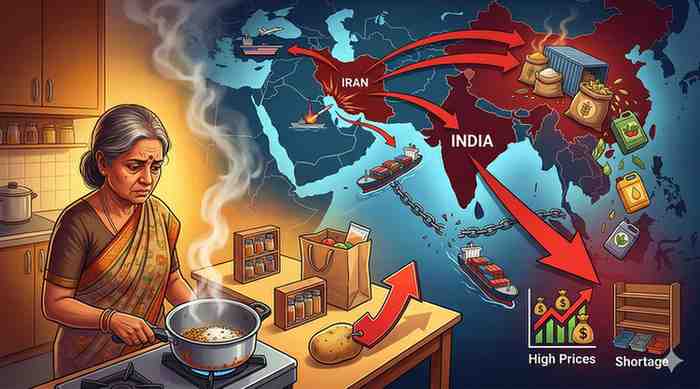
The ongoing West Asia conflict between the US and Iran has severely disrupted operations of major Asian food exporters, triggering supply chain chaos that is now reaching Indian shores. Global shipping routes through the Strait of Hormuz face unprecedented risks, pushing up prices of essential commodities from cooking oil to seafood across Asian markets.
New Delhi, April 2026 — A major Asian food conglomerate has reported crippling losses as the US-Iran conflict enters a dangerous new phase, sending shockwaves through global supply networks that India depends on for key food imports.
What Is Happening?
Military tensions in West Asia have paralysed critical shipping lanes that carry food commodities to Asian markets. Insurance premiums for vessels passing through conflict zones have skyrocketed by over 300 percent in recent weeks. Major food exporters are now diverting shipments through longer, costlier routes around Africa.
Why Is This Important for Common Indians?
India imports significant quantities of edible oils, pulses, and seafood through routes affected by the West Asia crisis. Higher shipping costs are already translating into price rises at wholesale mandis across the country. Middle-class households may see monthly grocery bills increase by 8-12 percent if the conflict continues through summer.
What Do Experts Say?
Trade analysts warn that prolonged disruption could trigger a mini food inflation crisis in import-dependent Asian economies. “India’s buffer stocks provide some cushion, but we cannot remain insulated if this drags on beyond three months,” notes a senior food policy researcher. Industry bodies are urging the government to explore alternative sourcing arrangements with South American exporters.
- Strait of Hormuz handles nearly 20% of global oil trade and significant food cargo traffic
- Shipping insurance rates for West Asia routes have jumped 300-400% since conflict escalation
- At least one major Asian food exporter has reported quarterly losses exceeding $200 million
- Indian edible oil imports could face delays of 15-20 days due to route diversions
- Wholesale prices of imported pulses have already risen 6% in Indian markets this month
How Will This Affect You on the Ground?
For the average Indian household, this geopolitical crisis translates into tangible kitchen economics. Students and young professionals living independently in metro cities will feel the pinch first as restaurant and tiffin prices adjust upward. Small restaurant owners and dabba services operating on thin margins face difficult choices between absorbing costs or losing customers. Investors in FMCG stocks should watch quarterly results closely as input cost pressures mount.
आगे क्या? (What’s Next)
The coming weeks will be critical in determining whether this supply disruption remains temporary or becomes a prolonged crisis. If diplomatic channels fail to de-escalate tensions, India may need to activate emergency trade agreements with alternative supplier nations. The government is reportedly considering releasing buffer stocks of pulses and oils to stabilise domestic prices. Meanwhile, Indian exporters are also watching nervously — any retaliatory measures affecting Gulf markets could hurt remittances and export revenues that millions of Indian families depend on.
Leave a Reply