
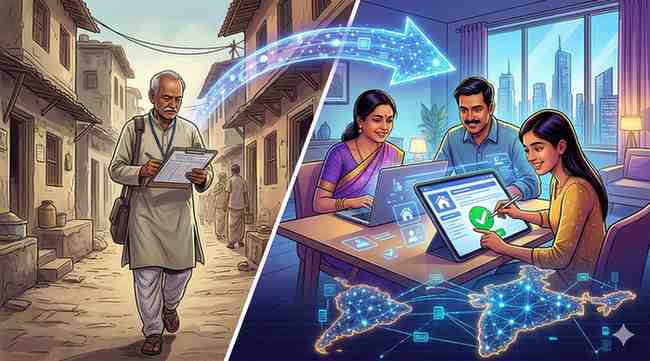
New Delhi, April 2026 — India has embarked on the world’s largest population counting exercise, but with a high-tech twist that sets it apart from any previous effort. Census 2027 is going fully digital, introducing a “Self-Enumeration” feature that allows citizens to participate in the democratic tally without waiting for an official to knock on their door.
A Shift to the Citizen’s Hands
For the first time, the “Self-Enumeration” process empowers individuals to fill out their own and their family’s details online. This transition from paper-heavy, manual recording to a digital-first approach is designed to enhance data privacy, improve accuracy, and significantly speed up the massive logistical undertaking.
The Enrollment Process: A Step-by-Step Guide
The government has streamlined the digital portal to ensure it is accessible to all. The process typically takes between 15 to 20 minutes:
- Initial Access: Citizens must visit the official Census of India 2027 website, select their state or Union Territory (UT), and complete a captcha verification to enter the secure portal.
- Family Authentication: The head of the household registers by providing their mobile number and name. A One-Time Password (OTP) system is used to verify the identity and ensure the security of the session.
- Geospatial Accuracy: Users provide their address details, including landmark and locality. A unique digital requirement involves marking the exact location of the home on a map interface to ensure precision in geographic data.
Questionnaire and Verification
Once the location is pinned, users answer a comprehensive questionnaire regarding household and family information. The portal allows for a thorough review, giving users the chance to edit any discrepancies before the final submission. This “edit-check” feature is expected to drastically reduce the data correction workload typically handled by census officers.
The SEID: Your Digital Receipt
Upon successful submission, the system generates a Self-Enumeration ID (SEID). Officials urge citizens to save or record this ID carefully. When census workers eventually conduct their door-to-door validation, presenting the SEID will allow them to quickly verify the household’s completion of the census, making the visit brief and efficient.
Timeline and Portal Availability
The Self-Enumeration portal is not open indefinitely; it is scheduled to go live at least 15 days prior to the start of the door-to-door physical service in any given region. Because schedules vary by state and UT, the government encourages citizens to monitor local announcements and complete their registration as soon as the window opens for their area.
Bottom Line
The Census 2027 initiative represents more than just a headcount; it is a testament to India’s digital transformation. By moving toward self-enumeration, the government is not only simplifying a complex task but also fostering a culture of digital participation, ensuring that the data used to shape the nation’s future policies is as accurate and contemporary as possible.
Leave a Reply