
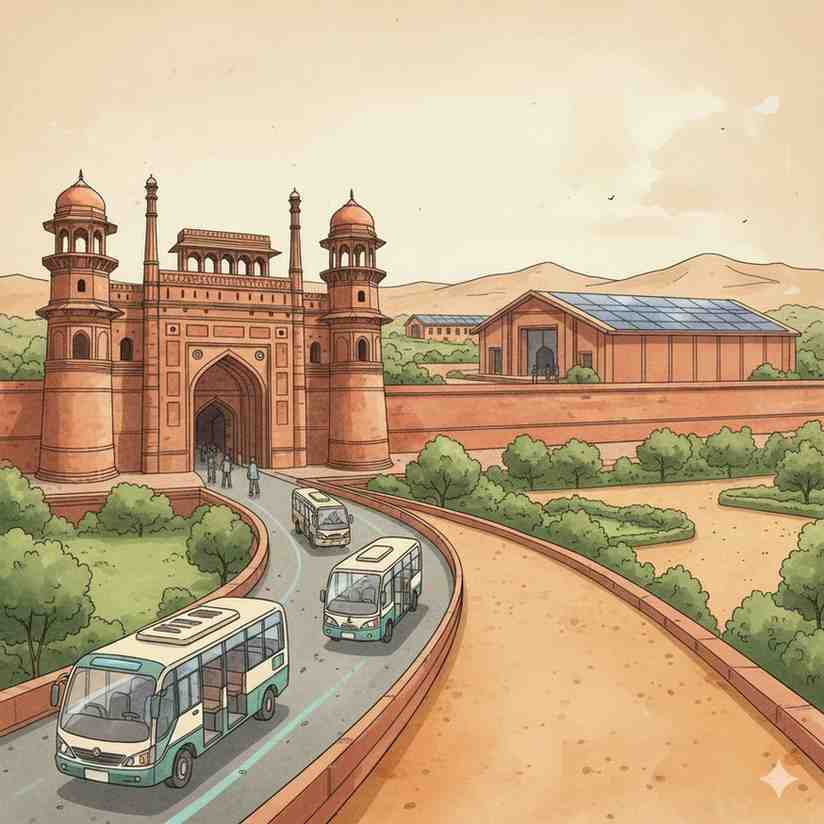
Preparing for Growth: How Fatehpur Sikri Can Lead the Way in Sustainable and Inclusive Tourism
Key Metrics:
- Tourist Footfall: Fatehpur Sikri attracts approximately 3-4 million visitors annually.
- UNESCO World Heritage Status: Designated a UNESCO World Heritage Site in 1986.
- Economic Contribution: Tourism contributes an estimated ₹300-400 crore annually to the local economy.
- Infrastructure Investment: The Indian government has allocated ₹25 crore for infrastructure development in and around Fatehpur Sikri.
- Employment Generation: The tourism sector in Fatehpur Sikri provides jobs to over 10,000 locals directly and indirectly.
Fatehpur Sikri, one of India’s most iconic historical sites and a UNESCO World Heritage Site, has long been a major attraction for tourists. Its stunning Mughal architecture, rich cultural history, and proximity to the vibrant city of Agra make it an ideal spot for cultural tourism. However, as the number of visitors continues to rise, the question arises: Is Fatehpur Sikri ready to handle the future demands of tourism, and how can it leverage its unique heritage to create a more sustainable and inclusive tourism strategy?
A Popular Tourist Destination
With around 3-4 million visitors annually, Fatehpur Sikri remains a significant contributor to India’s tourism industry. The town, famous for its historical monuments like the Buland Darwaza and the Jama Masjid, draws tourists not just from across India, but from around the world. The city’s rich Mughal history, combined with its UNESCO World Heritage status since 1986, has made it an essential stop for those exploring India’s cultural heritage.
However, with its increasing popularity, the demand for better infrastructure, services, and a more seamless tourist experience is growing. The challenge now is not only to preserve the heritage of Fatehpur Sikri but also to ensure that its tourism potential is developed in a way that benefits both visitors and the local community.
Infrastructure and Development Challenges
Fatehpur Sikri has been at the center of recent discussions about infrastructure development in tourist-heavy regions. The Indian government has allocated ₹25 crore for improving the infrastructure around the monument, which includes upgrading roads, enhancing facilities for tourists, and providing better access to the site. While these efforts are commendable, the town’s narrow streets, outdated facilities, and limited public transport options remain areas that need significant improvement.
The lack of modern amenities such as comfortable accommodation, reliable public transport, and sufficient tourist facilities hinders the full potential of the site. The current facilities are often unable to meet the high influx of tourists, especially during peak seasons. Without proper upgrades, the visitor experience could deteriorate, leading to dissatisfaction and potentially damaging the site’s reputation as a world-class destination.
Sustainable Tourism for the Future
One of the biggest concerns for tourism at Fatehpur Sikri is the need for sustainable practices. As tourism increases, so does the environmental impact. Local authorities need to adopt sustainable tourism practices that will protect the integrity of the site while accommodating the growing number of tourists. Initiatives such as waste management, conservation efforts, and promoting eco-friendly tourism practices are crucial for the preservation of this historic site.
There is also a need for a focus on responsible tourism. Educating visitors about the importance of preserving the historical sites and encouraging them to respect the environment and local culture is essential. Moreover, promoting community-based tourism can ensure that the economic benefits of tourism are distributed to local artisans, guides, and hospitality providers, rather than solely benefiting large commercial entities.
Economic Potential and Job Creation
Fatehpur Sikri’s tourism sector plays a vital role in the local economy, contributing approximately ₹300-400 crore annually. The site generates employment for over 10,000 locals, including guides, artisans, hotel staff, and shopkeepers. As tourism grows, the potential for job creation in related sectors increases, further bolstering the local economy. However, for this growth to be inclusive, there must be a concerted effort to provide training and resources to local communities. Empowering the local workforce with the skills necessary to provide high-quality services to tourists will create a sustainable employment model that benefits all residents.
Partnerships and Public-Private Initiatives
For Fatehpur Sikri to thrive as a tourist destination in the coming years, public and private sector partnerships will be key. Collaborative efforts between the government, local businesses, and international tourism bodies can create a more robust strategy for developing the area. These partnerships can help fund infrastructure improvements, create joint marketing campaigns, and develop new, high-quality tourist experiences that are both educational and enjoyable.
Additionally, the promotion of nearby attractions, such as the Taj Mahal in Agra, can help create a more holistic tourism circuit, ensuring that tourists are encouraged to stay longer and explore more of the region. Combining efforts for the preservation and promotion of heritage across the region could elevate the entire area as a UNESCO World Heritage circuit.
Looking Ahead
As Fatehpur Sikri looks toward the future, there is great potential for its tourism industry to thrive. However, this success will depend on how well the local authorities, tourism bodies, and communities are able to collaborate in managing the challenges posed by increasing visitor numbers, while simultaneously preserving the city’s historical integrity. If managed correctly, Fatehpur Sikri can serve as a model for sustainable tourism that balances growth with preservation.
In conclusion, while Fatehpur Sikri has made strides in attracting millions of visitors, there is still much work to be done to ensure that the future of tourism here is both sustainable and inclusive. By focusing on infrastructure development, responsible tourism practices, and creating opportunities for local communities, Fatehpur Sikri can continue to be a beacon of India’s rich cultural heritage for generations to come. The question is not whether the city is ready, but how ready it can become with the right strategies in place.
Leave a Reply