
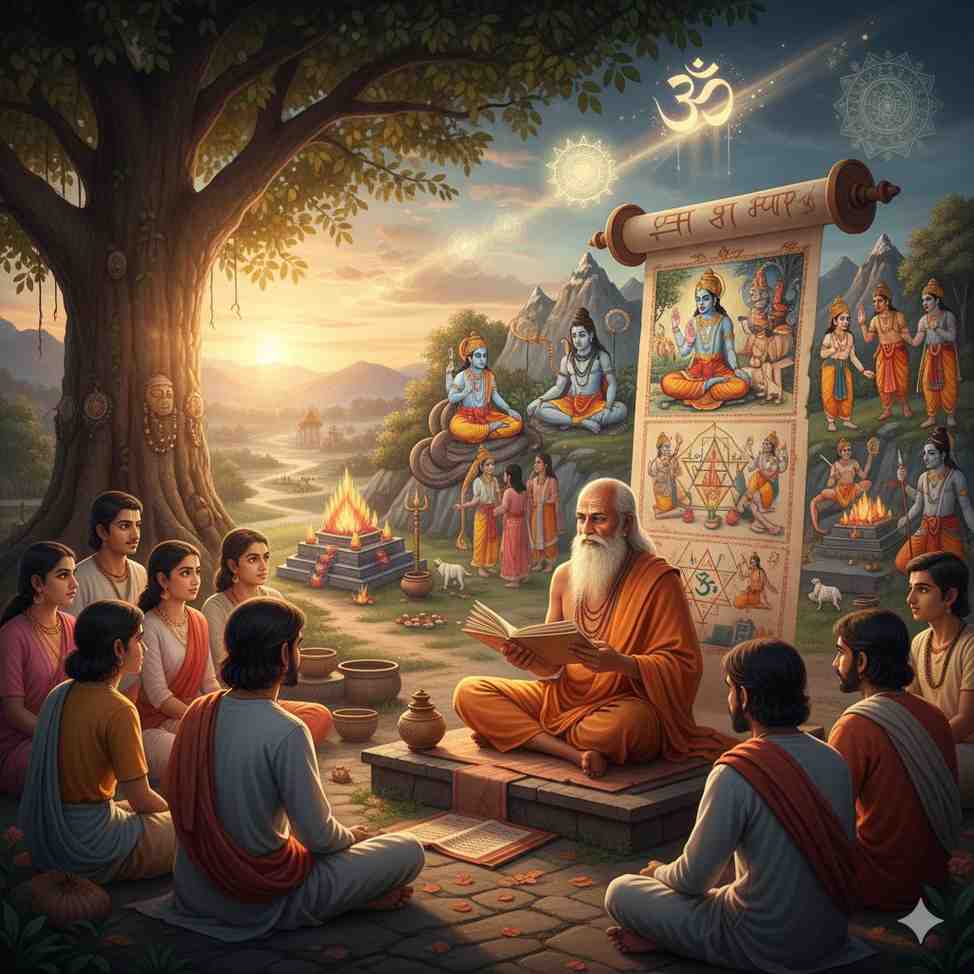
“From Screen to Scripture: Are We Truly Grasping the Depth of the Vedas?”
Hindu mythology has long been a captivating entry point for exploring India’s spiritual heritage. Through the larger-than-life portrayals of deities, epics like the Ramayana and Mahabharata, and philosophical allegories, mythology offers a glimpse into the cultural and religious fabric of Hinduism. However, as these stories make their way into modern media—serials, TV shows, web series, and films—their interpretations often become filtered, sensationalized, and simplified. This raises a critical question: Does our consumption of mythology in these formats truly help us understand the deeper philosophies of the Vedas, or are we engaging with a diluted version of an already filtered narrative?
Hindu Mythology as a Gateway to the Vedas
- The Philosophical Roots of Mythology:
- Hindu mythology derives much of its substance from the Vedas and Upanishads. Stories of creation, the interplay of deities, and cosmic order are drawn from Vedic hymns and principles such as Rita (cosmic order) and Dharma (righteousness).
- Mythology serves as a narrative form of conveying complex ideas. For instance, the tale of the churning of the ocean (Samudra Manthan) symbolizes the duality of life and the eternal quest for balance, mirroring Vedic concepts of interconnectedness.
- Simplification for Popular Appeal:
- Mythological stories simplify the intricate metaphysical teachings of the Vedas, making them accessible to broader audiences. While this has its merits, it often omits the philosophical depth, reducing these narratives to moral lessons or entertainment.
The Media Filter: A Double-Edged Sword
- Mythology in Modern Media:
- Serials and movies have become the primary source of exposure to Hindu mythology for many. Productions like Mahabharat and Ramayan on television, or films like Bahubali and Adipurush, focus heavily on visual grandeur and dramatic storytelling. While engaging, these adaptations often take creative liberties, prioritizing spectacle over substance.
- Filtered Perception:
- The mythology presented to audiences is already a filtered version of oral traditions and texts, shaped by centuries of reinterpretation. Media adaptations filter it further for mass appeal, leaving viewers with a highly distilled version of the original philosophical essence.
- Is This Enough for Understanding the Vedas?
- The Vedas are not just repositories of stories but profound guides to self-realization and universal harmony. While mythology provides an entry point, relying solely on its media portrayals leaves significant gaps in understanding Vedic teachings. Philosophical ideas like Brahman, Atman, and Moksha rarely feature prominently in these adaptations, limiting their capacity to inspire deeper inquiry.
The Danger of Over-Simplification
- Losing Philosophical Depth:
- By focusing on characters and events, media portrayals often miss the Vedas’ emphasis on self-inquiry and metaphysical exploration. The transformation of mythology into easily digestible narratives can overshadow its spiritual and philosophical origins.
- Reinforcing Misconceptions:
- Simplified or dramatized depictions risk perpetuating stereotypes and misunderstandings about Hindu philosophy, creating a disconnect between popular mythology and the profound wisdom of the Vedas.
Bridging the Gap: A Call for Deeper Engagement
- Educational Efforts:
- Introducing accessible, authentic interpretations of the Vedas in schools, universities, and public forums can bridge the gap between mythology and philosophy.
- Responsible Media Representation:
- Filmmakers and content creators must balance storytelling with authenticity, ensuring that the essence of Vedic wisdom is not lost amidst creative liberties.
- Individual Exploration:
- For those drawn to mythology, delving into the original texts, such as the Upanishads or Bhagavad Gita, can enrich their understanding and foster a direct connection with Vedic philosophy.
Conclusion
While Hindu mythology provides an engaging window into the Vedas, it is not enough to fully understand their depth and complexity—especially when filtered through the lens of modern media. True engagement with Vedic philosophy demands more than passive consumption; it requires active inquiry, reflection, and exploration of the texts themselves.
The Vedas are not just about stories of gods and cosmic battles—they are about understanding the self, the universe, and the eternal truths that connect them. It is through this deeper engagement that we can move beyond the filtered narratives and rediscover the timeless wisdom they offer.
Leave a Reply