
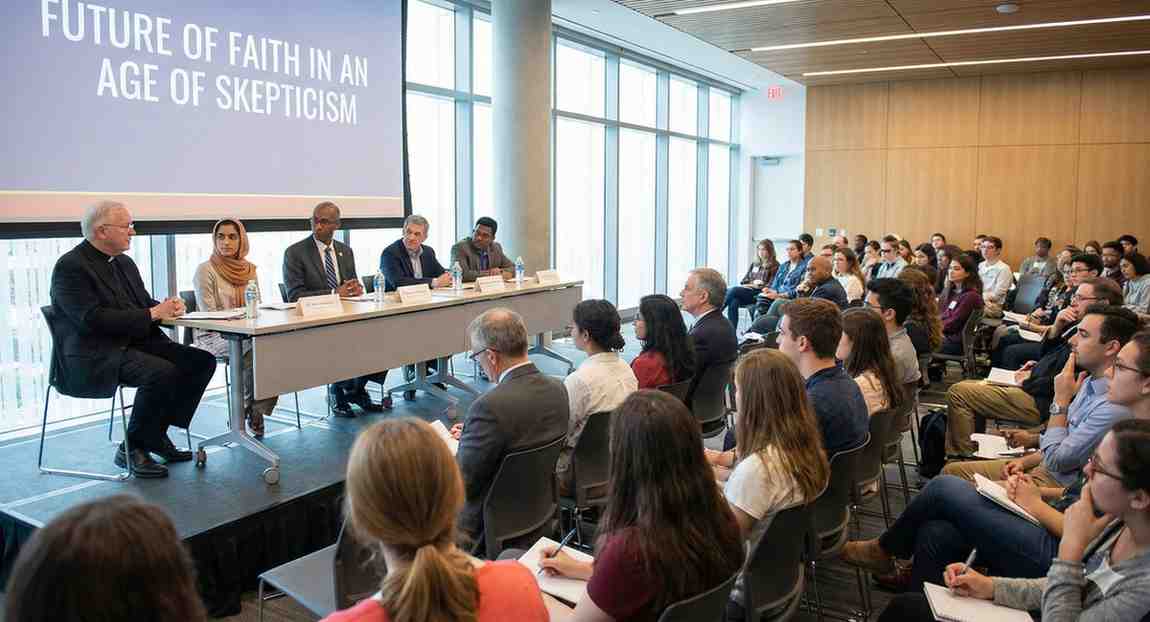
Faith Faces Growing Questions Amid Scientific Advancements and Social Shifts
Faith, long regarded as a cornerstone of human society, is undergoing a transformation. In an era of rapid scientific progress, shifting social values, and global interconnectedness, traditional religious beliefs are increasingly challenged by skepticism. This growing divide raises urgent questions about the future of faith and its relevance in modern life.
Faith Under Pressure: The Numbers Speak
- Decline in Religious Affiliation:
- A Pew Research Center (2023) study reports that only 26% of Europeans under 30 identify as religious, reflecting a steady decline in faith-based affiliations across developed nations.
- In the U.S., the percentage of adults identifying as Christian dropped from 75% in 2011 to 63% in 2021, signaling a broader trend of disconnection from organized religion.
- India’s Shifting Dynamics:
- In a 2022 Lokniti-CSDS survey, 35% of urban Indian youth expressed skepticism toward traditional religious practices, opting for personal spirituality over institutionalized worship.
- Despite India’s deep-rooted spirituality, the younger generation increasingly questions rituals, prioritizing ethical values over orthodox teachings.
- Rise of Secularism Globally:
- Countries like Sweden and Japan now have over 50% of their populations identifying as non-religious, according to the World Values Survey (2022).
Why Skepticism is Growing
- Scientific Advancements Challenging Beliefs:
As science explains phenomena once attributed to divine intervention, religious doctrines are facing new scrutiny.- The acceptance of evolution over creationism has grown worldwide, with a Pew Research Center (2023)report showing 40% of Americans now aligning with scientific explanations for life’s origins.
- In India, the removal of Darwin’s theory from school textbooks in 2023 sparked debates about the intersection of science and religion.
- Institutional Mistrust:
Scandals involving religious institutions have eroded public trust:- The Catholic Church continues to grapple with fallout from sexual abuse scandals, leading to declining membership in Europe and the Americas.
- In India, cases like the conviction of Gurmeet Ram Rahim Singh for crimes ranging from sexual assault to murder have cast doubt on the credibility of self-styled spiritual leaders.
- Social and Cultural Modernization:
Religious teachings are increasingly seen as at odds with contemporary values like gender equality and LGBTQ+ rights:- Activists in Islamic countries are challenging patriarchal interpretations of Sharia law.
- In India, younger generations question restrictions on women’s entry to temples like Sabarimala, demanding reforms aligned with constitutional principles.
How Faith is Evolving
Despite growing skepticism, faith remains resilient and continues to adapt:
- Reinterpreting Doctrines:
Religious leaders are revisiting sacred texts to align teachings with modern values:- Pope Francis has advocated for inclusivity within the Catholic Church, addressing LGBTQ+ rights and environmental concerns.
- Progressive Hindu scholars emphasize personal growth and mindfulness, moving beyond ritualistic interpretations of scriptures like the Bhagavad Gita.
- Digital Outreach:
Technology is reshaping how people engage with faith:- Virtual congregations and online sermons have become common, particularly post-COVID-19.
- Spiritual influencers on platforms like YouTube and Instagram blend ancient teachings with modern self-help trends to attract younger audiences.
- Focus on Shared Global Challenges:
Faith-based organizations are increasingly collaborating with secular groups to address universal issues:- The Faith for Earth Initiative by the United Nations encourages interfaith action on climate change.
- Religious charities worldwide are focusing on poverty alleviation and refugee support, transcending doctrinal divides.
Challenges to Adaptation
- Balancing Tradition and Modernity:
Efforts to reform religious practices often face resistance from conservative factions:- The 2018 Supreme Court ruling on Sabarimala, which allowed women of menstruating age into the temple, sparked protests from traditionalists who saw the decision as an affront to religious customs.
- Countering Extremism:
Radical interpretations of faith continue to fuel global conflicts:- The 2022 Global Terrorism Index highlighted religious extremism as a primary cause of violence, underscoring the urgent need for moderation and reform.
- Generational Disconnection:
Millennials and Gen Z are less likely to identify with organized religion, seeking spiritual fulfillment through alternative means like mindfulness apps and wellness retreats.
The Future of Faith: What Lies Ahead?
- Personalized Spirituality:
As institutional religion declines, personalized approaches to spirituality—such as yoga, meditation, and secular mindfulness—are gaining traction. - Emphasis on Universal Values:
Faith organizations that prioritize universal principles like compassion, justice, and environmental stewardship are more likely to resonate with modern audiences. - Dialogue Between Science and Faith:
Bridging the gap between science and spirituality is critical for faith’s relevance in the modern world:- Collaborative efforts between religious and scientific communities, such as the Templeton Foundation’s initiatives, highlight the potential for coexistence.
Conclusion: Adapting or Losing Ground?
Faith stands at a crossroads in the age of skepticism. While scientific advancements and modern values challenge traditional doctrines, they also provide opportunities for introspection and reform. Religious institutions and leaders must engage critically with these shifts to ensure faith remains a guiding force rather than a relic of the past.
As Carl Sagan aptly observed, “Science is not only compatible with spirituality; it is a profound source of spirituality.” The challenge for faith lies in finding harmony with modernity, ensuring it evolves alongside humanity’s quest for meaning and truth.
Leave a Reply