
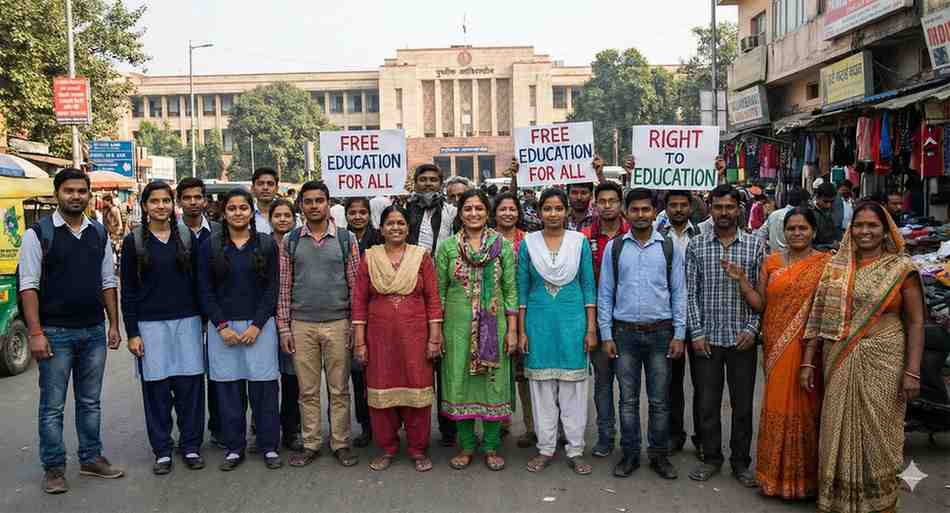
The Case for Free Education: A Right, Not a Privilege
Education is often hailed as the great equalizer, a tool that can lift individuals out of poverty and empower them to contribute meaningfully to society. In a country like India, where socio-economic disparities are stark, making education completely free could be a transformative step toward achieving equality. But is this vision practical, or is it an idealistic dream riddled with challenges?
The Argument for Free Education
- Breaking the Cycle of Poverty: Free education would make learning accessible to children from the most disadvantaged backgrounds, giving them a chance to break free from the cycle of poverty. By removing financial barriers, students who might otherwise drop out due to costs could continue their education and gain the skills needed for gainful employment.
- Universal Access to Opportunity: Education is not just about acquiring knowledge; it’s about opening doors to opportunities. Free education would ensure that children from marginalized communities have the same access to quality schools as their more privileged peers, leveling the playing field.
- A Boost to the Economy: An educated workforce is essential for driving economic growth. By investing in free education, India could create a generation of skilled workers who contribute to sectors ranging from technology to healthcare. In the long run, the economic benefits of an educated population could far outweigh the initial costs of implementing free education.
- Fulfilling the Right to Education: India’s Constitution guarantees the Right to Education (RTE) for children aged 6 to 14. Expanding this to include free education for all age groups would be a natural progression of this commitment, aligning with the global goal of inclusive and equitable education for all.
The Practical Challenges
While the benefits of free education are undeniable, the challenges of implementing such a system are equally significant.
- Funding Constraints: Providing free education to over 250 million school-going children would require massive financial investment. India already allocates a significant portion of its budget to education, but ensuring free education for all would necessitate even higher spending. Where would this money come from? Would other critical sectors like healthcare or infrastructure suffer as a result?
- Quality vs. Quantity: Making education free does not automatically guarantee quality. Government schools, which already provide free or subsidized education, often suffer from poor infrastructure, teacher shortages, and lack of resources. Scaling up free education could exacerbate these issues, potentially compromising the quality of education.
- Accountability and Corruption: A fully free education system could face challenges with accountability and corruption. Without stringent checks and balances, funds earmarked for free education might not always reach their intended beneficiaries.
- Balancing Private and Public Roles: Private schools currently play a significant role in India’s education system, catering to millions of students. If education becomes entirely free, would private schools be incentivized to continue operating? How would the government regulate or integrate these institutions into a free education model?
Lessons from Other Countries
Several countries, including Finland, Norway, and Germany, have successfully implemented free education systems. These nations demonstrate that it is possible to provide free, high-quality education, but they also highlight the importance of robust public funding, efficient management, and a strong focus on teacher training.
India could draw inspiration from these models, tailoring them to its unique socio-economic context. However, replicating such systems would require significant policy reform, cultural shifts, and long-term investment.
Alternatives to Full-Free Education
- Income-Based Subsidies: Instead of making education free for all, the government could focus on income-based subsidies. Families below a certain income threshold could receive free education, while others contribute based on their financial capacity.
- Public-Private Partnerships: Collaborations between the government and private institutions could help improve access and quality without entirely shouldering the financial burden on the public sector.
- Strengthening Vocational Education: Expanding access to free or subsidized vocational training could empower students with practical skills, reducing dropout rates and bridging the gap between education and employability.
- Focus on Early Education: Ensuring free education at the foundational level—preschool and primary education—could create a solid base for children, even if higher education remains partially subsidized.
The Question of Higher Education
Should free education extend to colleges and universities? While this idea is appealing, the financial implications are even more significant at the higher education level. A possible middle ground could be introducing merit-based scholarships, low-interest student loans, and income-contingent repayment systems, ensuring that deserving students can pursue higher education without financial stress.
Conclusion: A Step-by-Step Approach
Free education in India is a noble and necessary goal, but achieving it requires careful planning and a phased approach. The focus should be on strengthening the existing public education system, ensuring equitable access, and maintaining quality. A completely free education system may not be immediately feasible, but targeted reforms and investments can pave the way for a more inclusive and equitable future.
The debate isn’t just about whether education should be free; it’s about creating a system where no child is denied the opportunity to learn due to financial constraints. As India aspires to be a global leader, investing in education isn’t just an expense—it’s the most powerful investment in its people and its future.
Leave a Reply