
From Monarchies to a Unified Republic: The Transformation of India’s Governance
Key Metrics:
- Pre-Independence India: Composed of over 560 princely states, each governed by monarchs or local rulers under British suzerainty.
- Constitutional Framework: Adopted on January 26, 1950, uniting the nation under a single democratic governance model.
- Electoral Scale: Over 900 million registered voters as of the 2019 general elections, highlighting the inclusivity of India’s democracy.
- Diversity in Governance: India’s Parliament comprises representatives from every state and union territory, ensuring national integration.
News Body
Before 1947, India was a fragmented land, not a single nation as we know it today. It was a mosaic of over 560 princely states, each ruled by monarchs with varying degrees of autonomy under British suzerainty. These states represented a patchwork of governance systems, often marked by hereditary rule, feudal practices, and limited public participation. Against this backdrop, the establishment of a unified democratic republic stands as one of modern history’s most remarkable achievements.
India’s transition from a land of monarchies to the world’s largest democracy is a story of resilience, vision, and transformation.
The Era of Princely States: A Fragmented India
During the British Raj, India was divided into British-administered territories and princely states. These princely states, ruled by kings, maharajas, nawabs, and nizams, retained varying levels of autonomy. While some rulers modernized their territories with education and infrastructure, others maintained feudal hierarchies that left large sections of their populations disenfranchised.
For instance, Hyderabad, under the Nizam, was one of the wealthiest states but was marred by social inequality. Similarly, smaller princely states often lacked governance structures for public welfare, with power concentrated in the hands of a few.
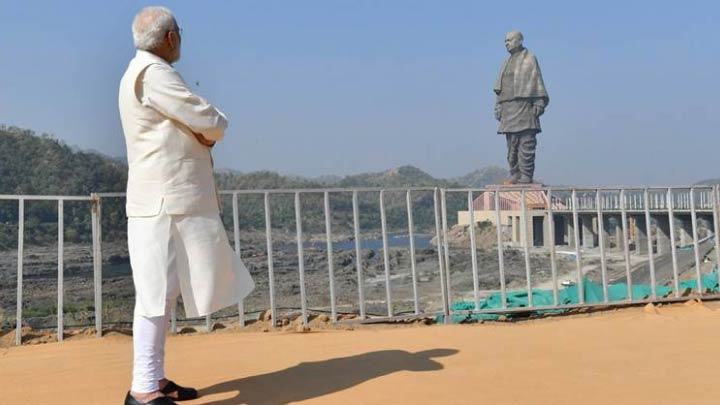
The partitioning of India into these autonomous entities posed significant challenges for national integration after independence. Yet, the idea of a united, democratic India prevailed, thanks to the foresight of leaders like Sardar Vallabhbhai Patel, who spearheaded the integration of princely states into the Indian Union.
The Birth of Democracy: A Unified Republic
India’s adoption of democracy was a revolutionary step. The Constitution of India, drafted by the Constituent Assembly under the leadership of Dr. B.R. Ambedkar, laid the foundation for a governance system that rejected monarchy in favor of universal suffrage and equality. On January 26, 1950, India officially became a republic, uniting its diverse population under a single democratic framework.
This transformation ensured that power was no longer inherited but earned through public trust. Elections became the cornerstone of governance, allowing citizens from all walks of life to choose their representatives.
The integration of princely states into the democratic fold was no small feat. By 1950, all princely states had either merged into existing provinces or formed new ones, marking the end of monarchical rule in India. The success of this transition lies in the establishment of institutions that upheld the principles of democracy, justice, and inclusion.
How Democracy Has Shaped Modern India
India’s democracy has not only unified the nation but also empowered its citizens. By granting universal adult suffrage, the country ensured that every individual, regardless of caste, religion, gender, or region, had an equal voice in governance.
The representation of diverse communities in Parliament and state legislatures reflects the inclusivity of India’s democracy. Leaders from marginalized backgrounds, such as Dr. B.R. Ambedkar and Jagjivan Ram, rose to prominence, breaking the barriers of caste and class.
Democracy also brought accountability to governance. Policies addressing education, healthcare, and rural development emerged as a direct response to the needs of the people, as voiced through elections and civic engagement.
Challenges and Triumphs of Democracy
While India’s democratic journey has been transformative, it has not been without challenges. Regional disparities, communal tensions, and corruption have tested the resilience of the system. However, democracy’s inherent ability to adapt and reform has allowed India to navigate these hurdles.
The transition from princely states to a democratic republic was not merely a political change but a cultural and social evolution. Today, India’s democracy stands tall as a beacon of unity, reflecting its ability to embrace diversity while upholding the principles of equality and justice.
Conclusion
India’s transformation from a collection of princely states to a unified democratic republic is a testament to the power of governance rooted in the will of the people. The journey from monarchies to a vibrant democracy highlights the resilience and vision of its leaders and citizens.
As the world’s largest democracy, India exemplifies how inclusivity, representation, and accountability can create a nation that not only respects its diversity but thrives on it. In the shadows of its history, India’s democracy continues to shine, reminding us of the strength that comes from unity and the courage to embrace change.
Leave a Reply