
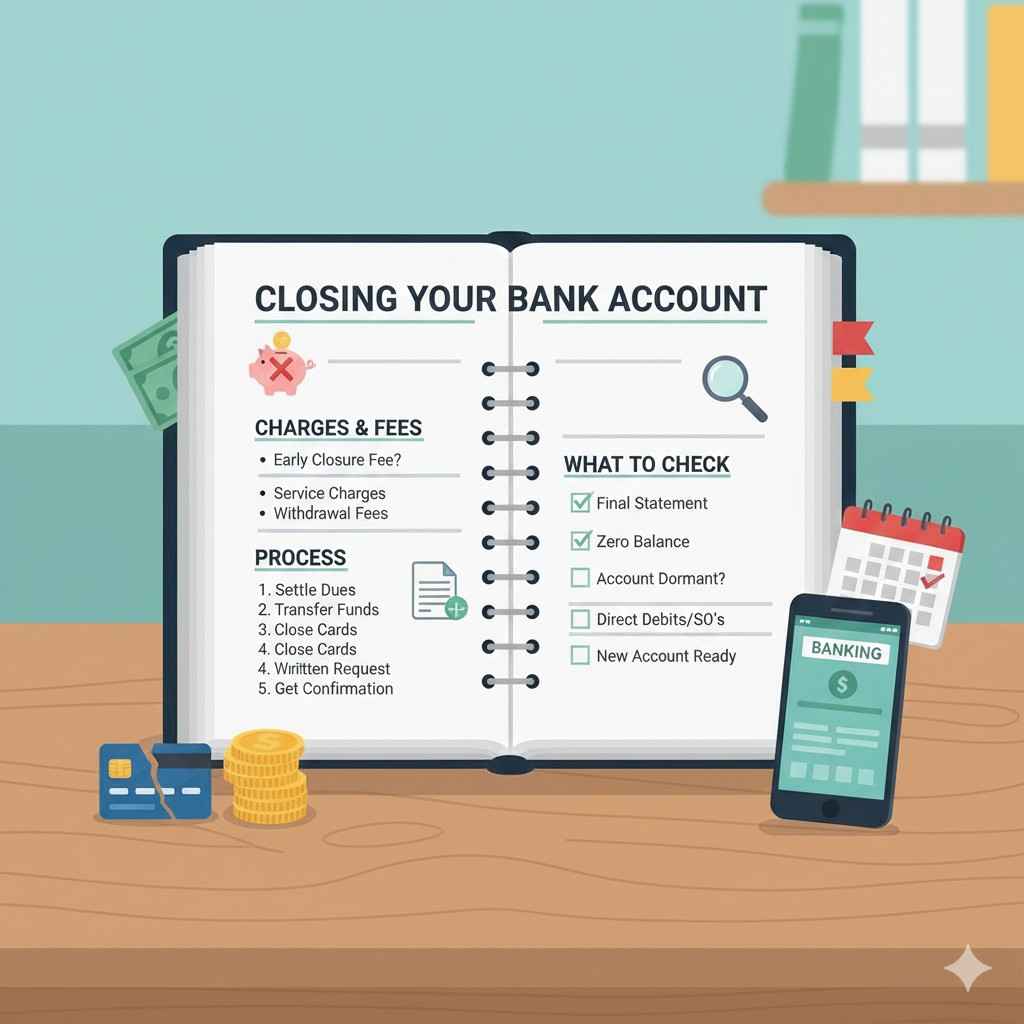
Key highlights
- Closing an account is mostly about cleaning up linkages (UPI, ECS/NACH, salary credits, SIPs) before the closure request.
- Banks must follow published policies and transparent charges; RBI’s customer service framework emphasizes consumer protection and fair practices. Reserve Bank of India+1
- If a bank acts unfairly, RBI’s Ombudsman / Complaint Management System route exists. SEC+1
The “silent trap”: auto-debits that keep reviving problems
Before closing, list everything tied to the account:
- SIPs, EMI auto-debits, insurance
- Salary credits
- UPI mandates, OTT subscriptions
- Rent transfers and standing instructions
Scenario: You close an account, then an EMI hits and bounces.
That bounce can trigger late fees elsewhere. So closure must be planned, not impulsive.
The clean closure checklist
1) Download last 6–12 months statement (proof for future).
2) Zero out dues (negative balance, lien, pending charges).
3) Cancel mandates (NACH/ECS) and move salary/credits.
4) Submit closure request at branch/app as applicable and ask for closure confirmation in writing.
5) Collect remaining balance via transfer or pay order (as permitted).
Charges: what’s realistic in 2026
Charges vary by bank and account type, but RBI’s customer service expectations push banks toward transparent, disclosed charges and fair treatment. Reserve Bank of India+1
Small question people search: “What if the bank refuses or delays?”
Escalate: bank grievance redressal → RBI Ombudsman/Complaint Management System if unresolved. SEC+1
Leave a Reply