
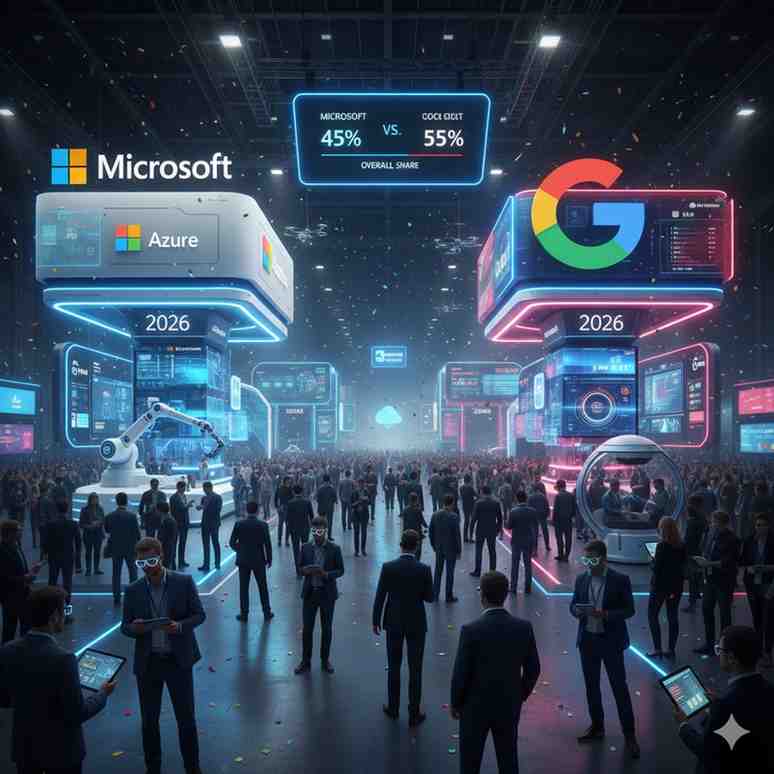
Key highlights
- Microsoft’s edge is distribution (Windows + Microsoft 365 + enterprise identity) and its deep AI partnership stack. bis.org+1
- Google’s edge is vertical integration (AI research, custom infrastructure, and rapidly scaling Cloud economics). SEC
- In 2026, “winning” means converting AI demand into durable margins, not just flashy demos.
What “owning enterprise AI” actually means
Enterprises don’t buy “a model.” They buy:
- secure access + identity controls
- compliance logging + governance
- data connectors + permissions
- predictable cost controls
- reliability and support
So the platform that “owns” enterprise AI is the one that becomes the default place where AI is deployed, monitored, and paid for.
Microsoft’s 2026 advantage: the enterprise front door
Microsoft’s annual reporting emphasizes how its cloud and productivity offerings are embedded into enterprise workflows, and Microsoft’s AI partnership ecosystem is central to its positioning. bis.org+1
When AI is integrated into tools employees already live in (documents, email, meetings, security consoles), adoption becomes easier—and switching costs get uglier.
The hidden moat: governance. Enterprise CIOs prefer the vendor that can answer, instantly: who accessed what, where the data went, and what the model did.
Google’s 2026 advantage: scale economics are improving
Alphabet’s filings show Google Cloud has moved toward stronger operating performance, and AI investment is a core narrative across the business. SEC
Google can compete hard when:
- it can price aggressively,
- it can run models efficiently on its infrastructure,
- and it can bundle AI into cloud contracts.
The real fight: inference cost vs enterprise willingness to pay
A question people don’t ask (but budgets do):
“Does AI usage grow faster than AI profitability?”
AI workloads can explode costs. So 2026 is about:
- rate cards that don’t scare customers,
- guardrails that prevent runaway bills,
- and model routing (cheap model for most tasks, expensive model only when needed).
Small questions people search
Is Microsoft “more secure” than Google for AI?
Security is execution, not branding. Microsoft’s advantage is deep enterprise tooling; Google’s advantage is strong infrastructure and security research heritage. The buyer should test governance features, not slogans.
Will one of them dominate?
More likely: Microsoft dominates office workflow AI; Google wins specific data/ML-heavy deployments and cost-optimized cloud AI—depending on industry.
Leave a Reply