
Key highlights
- Google is embedding generative AI across products and explicitly says it’s expanding AI investment company-wide. SEC
- The real question isn’t “Search dies,” but how monetization changes when answers become conversational.
- 2026 risk: AI is expensive—Google notes AI requires significant investment in infrastructure and operations. SEC
What Google is telling you (in its own words)
Alphabet describes product and platform efforts like Vertex AI with Gemini and generative AI integration across apps and Workspace. SEC
It also states plainly that AI is highly competitive, rapidly evolving, and requires significant investment. SEC
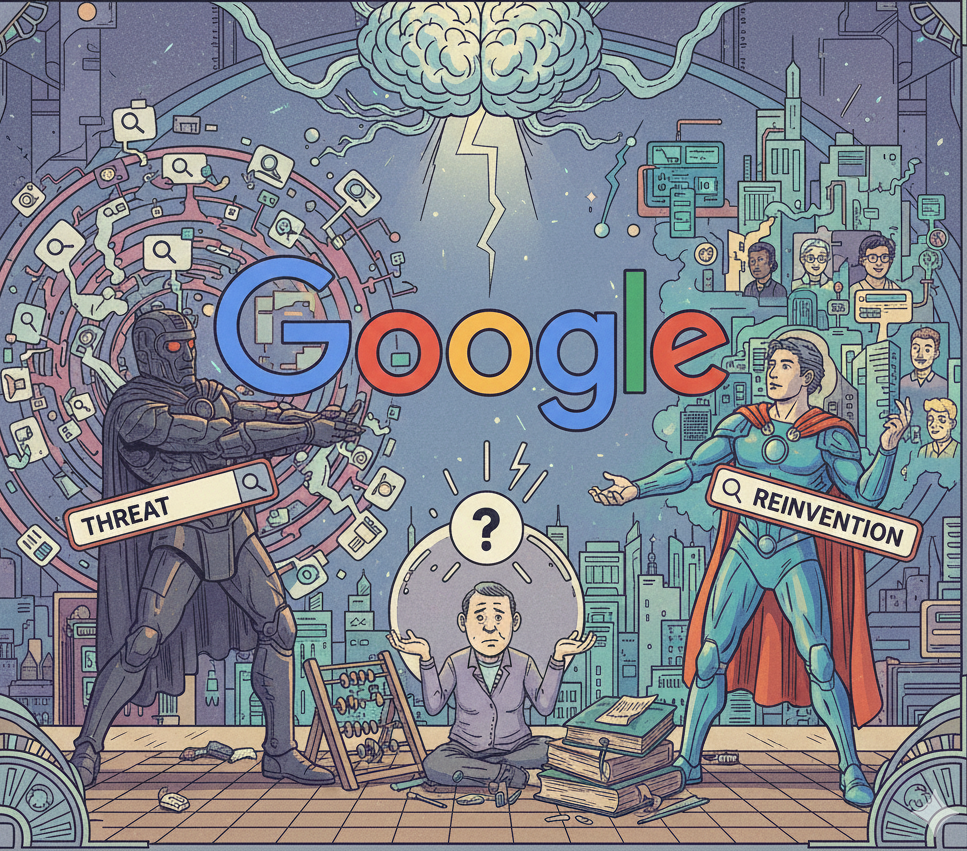
The three versions of 2026 Search
1) Myth: “AI replaces Search overnight.”
Not how distribution works. Habits, defaults, and ecosystem inertia matter.
2) Threat: “Users stop clicking links.”
If AI answers reduce outbound clicks, ad formats and pricing power must adapt.
3) Reinvention: “Search becomes an AI assistant.”
Google tries to keep intent inside its ecosystem while upgrading the experience.
Small question people search: “Will AI kill SEO?”
SEO doesn’t disappear. It shifts toward being cited/grounded as sources, brand authority, and structured content that models can reference—plus the classic reality: distribution still wins.
What to track in 2026
- AI cost curve: Infrastructure intensity and serving cost per interaction SEC
- Ad format evolution: How monetization moves with AI answers
- Cloud AI traction: Developer platforms like Vertex AI competing for enterprise workloads
Leave a Reply