
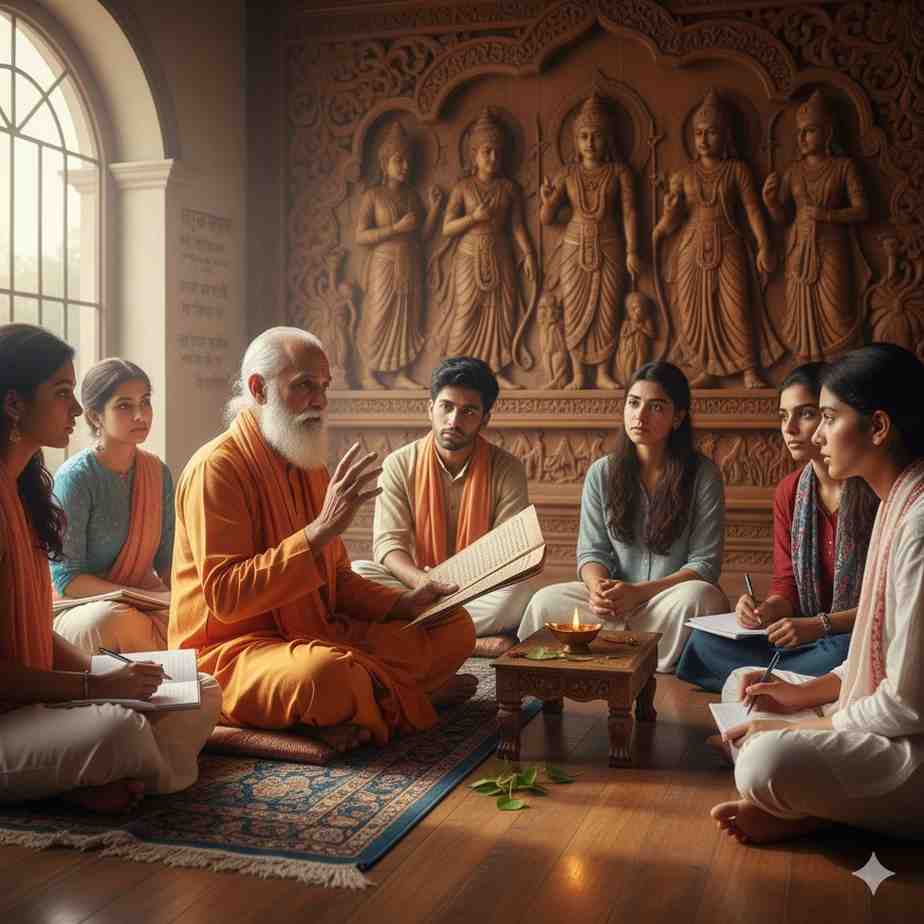
Ancient Wisdom for Modern Challenges
In a world grappling with ethical dilemmas, political turmoil, and corporate mismanagement, the timeless wisdom of the Vedas offers a blueprint for leadership rooted in integrity, selflessness, and vision. Far from being confined to ancient rituals or philosophical musings, Vedic principles on leadership emphasize harmony, ethical governance, and service to society—values that are strikingly relevant in today’s complex landscape.
1. Leadership According to the Vedas
Dharma-Centric Leadership
- The Vedas stress dharma (righteous duty) as the cornerstone of leadership. A leader must prioritize societal welfare over personal gain, ensuring their actions align with universal laws of harmony and justice.
- Example: The Bhagavad Gita encapsulates this ethos, where Krishna advises Arjuna to act selflessly for the greater good.
- Modern Application: Leaders in government and business can emulate this principle by fostering transparency, inclusivity, and ethical decision-making.
Guiding with Knowledge and Wisdom
- The Rigveda emphasizes the importance of knowledge (jnana) and wisdom (viveka) in leadership, urging leaders to constantly learn, adapt, and inspire others.
- Example: “He who knows all aspects of the situation is fit to lead” (Rigveda 10.125).
- Modern Application: Visionary leaders like APJ Abdul Kalam embodied this principle, blending technical expertise with moral clarity to inspire societal progress.
2. Relevance of Vedic Leadership Principles Today
Selfless Leadership in Corporate Ethics
- The concept of karma yoga from the Vedas advocates leadership through action without attachment to personal rewards. This aligns with modern corporate social responsibility (CSR) practices, where businesses prioritize societal and environmental welfare alongside profits.
- Example: Companies like Tata Group have built legacies by integrating ethical leadership with sustainable practices.
Harmony and Sustainability
- The Vedic principle of rita (cosmic order) underscores the importance of harmony between human actions and the environment.
- Global Implication: Modern leaders addressing climate change and sustainability can draw inspiration from Vedic texts to balance development with ecological preservation.
Unity in Diversity
- The Vedas celebrate inclusivity, exemplified by the Rigveda’s assertion, “Ekam sat vipra bahudha vadanti” (Truth is one, but the wise call it by many names).
- Modern Implication: In multicultural societies, leaders must foster unity by respecting diverse perspectives and promoting collective growth.
3. Challenges in Embracing Vedic Leadership
- Superficial Adoption: While leadership principles from the Vedas are often cited, their deeper ethical and philosophical essence is rarely implemented.
- Focus on Material Gains: The Vedic emphasis on selflessness often conflicts with the contemporary emphasis on power and profit.
4. Steps to Reinvigorate Vedic Leadership Today
- Educational Integration: Incorporating Vedic teachings into leadership training programs can instill values like selflessness, ethical decision-making, and sustainability.
- Public Awareness: Platforms that highlight the relevance of Vedic leadership principles in governance, business, and social initiatives can inspire future leaders.
- Practical Application: Aligning policy-making and corporate strategies with Vedic concepts like dharma and rita can address pressing issues such as corruption, inequality, and environmental degradation.
Conclusion: A Timeless Framework for Leadership
The Vedas offer a timeless guide to leadership that is deeply rooted in ethics, knowledge, and service. In an era marked by uncertainty and mistrust, these principles provide a much-needed framework for creating leaders who prioritize the collective good over personal ambition.
As society searches for leaders capable of navigating complex challenges, the question remains: Will today’s leaders rise to the occasion by embracing these ancient lessons, or will the wisdom of the Vedas remain an untapped reservoir of potential? The choice lies in our willingness to learn from the past and apply it to a better, more harmonious future.
Leave a Reply