
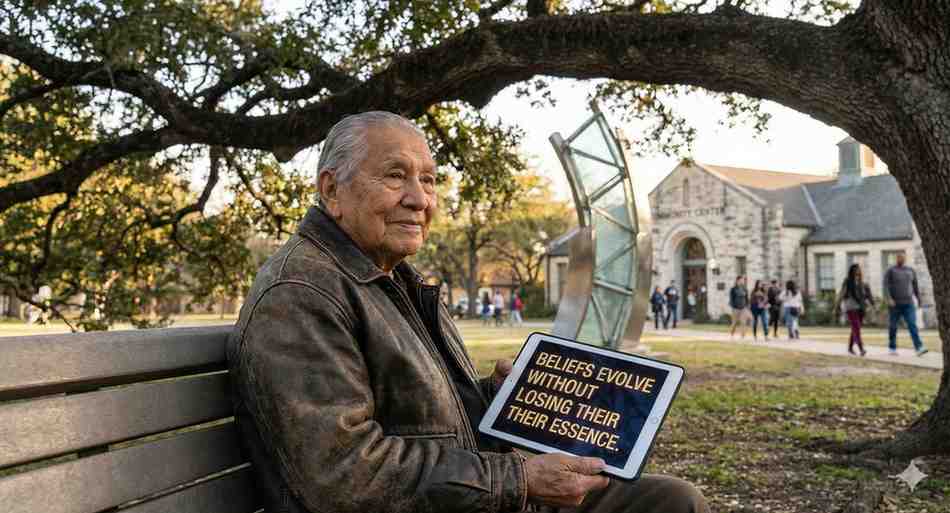
Balancing Tradition and Adaptation in an Ever-Changing World
Beliefs are the scaffolding of human existence, anchoring individuals and societies in purpose, values, and identity. They define how we interpret the world and respond to its challenges. Yet, as societies evolve, the question arises: Can beliefs change with the times without compromising their core essence?
At the intersection of tradition and progress lies a philosophical conundrum—whether beliefs are immutable truths or dynamic frameworks that must adapt to survive.
The Paradox of Belief: Fixed Yet Fluid
- Beliefs as Immutable Truths:
Philosophical traditions often position core beliefs as eternal and universal, transcending time and culture.- Plato’s concept of Forms posits that fundamental truths exist beyond the material world, unchanging and perfect.
- Many religious systems, like the Abrahamic faiths, emphasize the permanence of divine laws, which are viewed as beyond human alteration.
- Beliefs as Adaptive Frameworks:
Conversely, thinkers like Friedrich Nietzsche argue that beliefs are human constructs, subject to the flux of culture, history, and perspective.- In his work The Genealogy of Morals, Nietzsche critiques how moral beliefs evolve, shaped by power dynamics and societal needs rather than absolute truths.
- The Eastern philosophical concept of Anitya (impermanence) suggests that change is the natural order, even for beliefs.
This duality reveals that while beliefs may claim permanence, they are often reshaped by the environments in which they exist.
The Essence of Beliefs: What Must Endure?
For a belief to evolve without losing its essence, its core principles—those that give it meaning—must remain intact.
- Universal Values:
- Compassion, justice, and love are recurring themes across belief systems, from the Bhagavad Gita’s call for selfless action to the Quran’s emphasis on mercy and the Bible’s teachings of love thy neighbor. These values form the essence of many doctrines, transcending time and culture.
- Purpose Over Practice:
- Practices often change while their underlying purpose remains constant. For instance, fasting in various religions serves as a means of discipline and reflection, even as the specifics of how and when it is practiced evolve.
- Similarly, rituals like meditation in Buddhism have expanded from monastic traditions to modern wellness movements, maintaining their essence of mindfulness while adapting to contemporary needs.
Beliefs in Transition: Historical Lessons
- The Reformation:
The Protestant Reformation of the 16th century exemplifies how beliefs can evolve without losing their essence. Martin Luther’s challenges to Catholic dogma sought to strip away corruption while preserving the central tenet of faith in God. This evolution reshaped Christianity, creating new paths for spiritual growth. - Hinduism’s Adaptability:
Hinduism has evolved over millennia, absorbing and adapting to new cultural influences. From the Upanishadic focus on philosophy to Bhakti’s devotional practices, its ability to reinterpret and reformulate beliefs has ensured its continuity. - Modern Secularism and Faith:
In contemporary times, secularism has prompted religious institutions to engage with modernity. Pope Francis’ emphasis on environmental stewardship in Laudato Si’ reflects Catholicism’s adaptation to global ecological concerns while staying rooted in the principle of stewardship over creation.
The Role of Questioning in Evolution
Philosophers from Socrates to Jiddu Krishnamurti have emphasized that questioning is the lifeblood of belief. Without questioning, beliefs risk stagnation and irrelevance.
- Socrates: The Socratic method encourages constant interrogation of one’s beliefs, asserting that only through scrutiny can truth be discerned.
- Krishnamurti: He argued that true freedom lies in discarding inherited beliefs and discovering one’s truth, not as rebellion but as an act of authenticity.
By allowing beliefs to be challenged, they are not weakened but refined, shedding obsolete interpretations while preserving their core truths.
Can Beliefs Survive Change?
- Resistance to Change:
Beliefs often resist evolution due to fear of losing identity. However, history shows that rigidity often leads to irrelevance.- Example: Societal resistance to abolishing untouchability in India stemmed from rigid interpretations of caste-based beliefs. Reform, guided by leaders like Mahatma Gandhi and B.R. Ambedkar, preserved the essence of equality while discarding discriminatory practices.
- Embracing Change:
- Buddhism’s spread across cultures is a testament to adaptable beliefs. As it moved from India to China, Japan, and the West, it retained its core philosophy of enlightenment while integrating local traditions.
A Path Forward: Balancing the Immutable and the Adaptive
For beliefs to evolve while retaining their essence, societies and individuals must:
- Distill the Core:
Identify the unchanging principles that define the belief’s purpose and ensure these guide its evolution.- Example: Environmental activism rooted in indigenous beliefs of harmony with nature is being reframed in modern terms without losing its essence.
- Welcome Dialogue:
Engage in conversations across generations, cultures, and ideologies to explore how beliefs can adapt without losing their meaning. - Balance Tradition and Relevance:
Recognize that evolution does not mean abandonment. By aligning beliefs with contemporary challenges, their relevance—and essence—can be preserved.
Conclusion: The Dance of Change and Continuity
Beliefs are neither static monuments nor fleeting trends; they are dynamic systems capable of evolving while holding fast to their essence. The challenge lies in balancing their foundational truths with the necessity of adaptation.
As the philosopher Alan Watts observed, “The only way to make sense out of change is to plunge into it, move with it, and join the dance.” In that dance lies the future of belief—a harmony between timeless values and an ever-changing world.
Leave a Reply